**Warning this is quite long with lots of photos – make a coffee, sit down and enjoy!**
Dublin:
Despite high winds, we had a fairly smooth crossing of the Irish Sea from Holyhead to Dublin. Clear blue skies and sunshine followed us across the water and enriched a relaxed evening at our chosen campsite in Corkagh Park in the Clondalkin suburb of Dublin.
Dublin was founded as a Viking settlement in 988 AD. It has since evolved through medieval times, invasions, uprisings, and independence struggles into a very modern city. Luckily its history has survived in many hidden gems and some beautiful architecture.
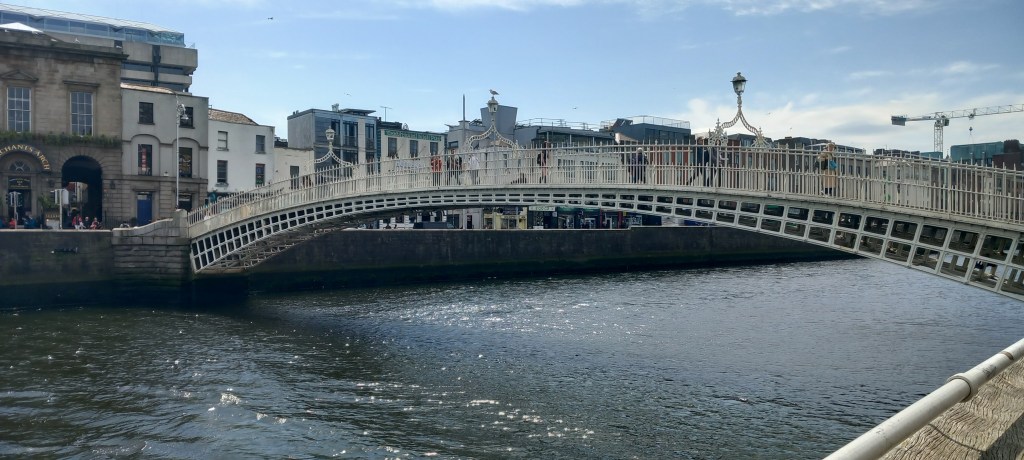
The Ha’Penny Bridge was erected in 1816, nicknamed as such because of the halfpenny toll charged until 1919. It is one of the earliest cast-iron structures of its kind and serves as a busy pedestrian bridge leading to Temple Bar south of the river. This very atmospheric area is full of restaurants and bars – many of which have live traditional Irish music playing from 10am!! until after midnight.
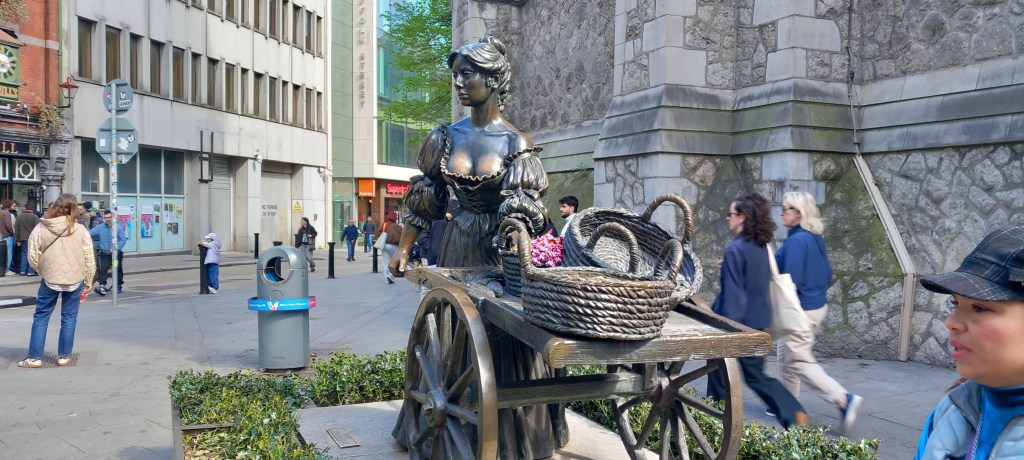
It is also home to the statue of Molly Malone – fictional or real (depends on who you listen to!), she was a fishmonger by day, and a lady of the night by night. You will no doubt have heard the “Cockles & Mussels” song in which she is mentioned.
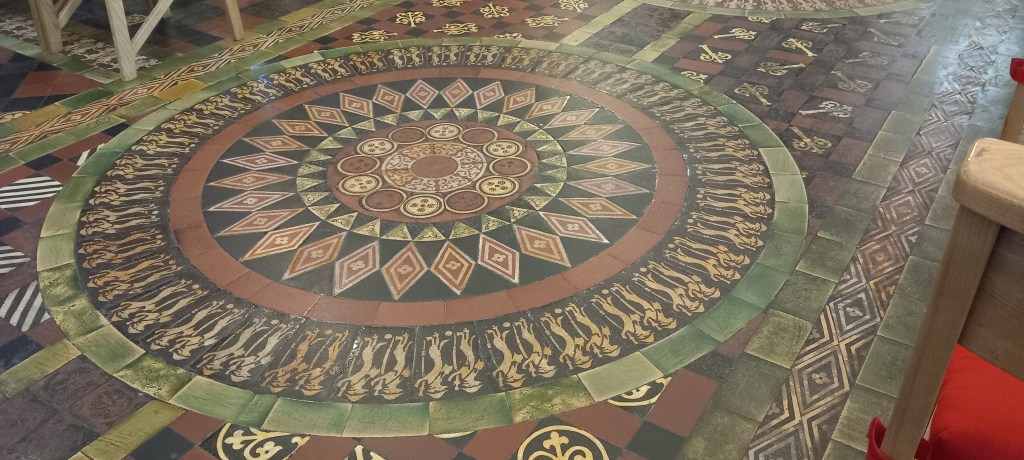
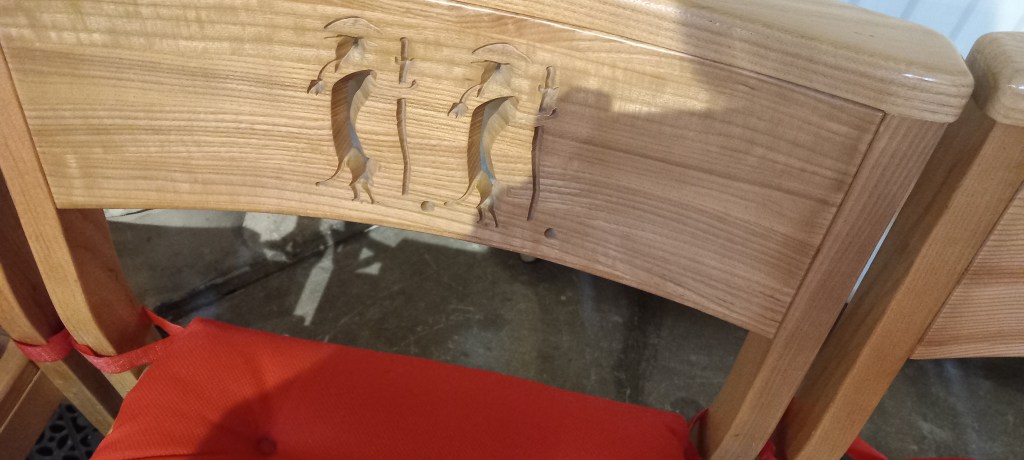
Christ Church cathedral is a wonderful mixture of medieval and 19th century, having been rebuilt, restored and renovated for more than a thousand years. The quilters amongst you will understand that I am always on the lookout for interesting patterns and designs. Christ Church’s floor tiles did not let me down. I was very taken with the Foxy Friars – foxes dressed as pilgrims complete with a brimmed hat, a satchel and a walking stick! Those pilgrims doing the medieval route of the Camino Ingles (Dublin to Ferrol, Ferrol to Santiago de Compostela), may get their ‘pilgrim passports’ stamped at Christ Church. The Foxy Friars are carved into the backs of all the church chairs – they also make up the Cathedral stamp.
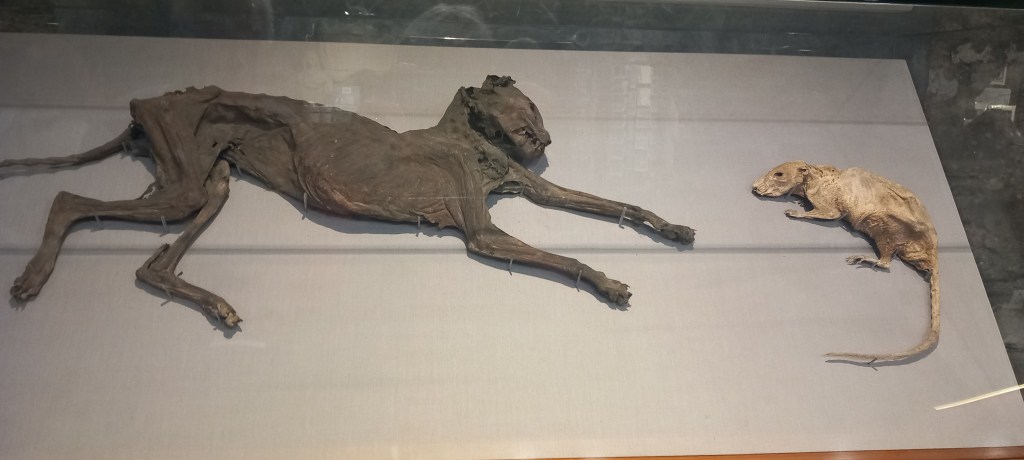
A rather sad (but cute) exhibit in the crypt shows us the Cat & the Rat. The story goes that the cat chased the rat into an organ tube and neither of them could escape. Their skeletons were found many years later (in the 1850’s) and are now mummified – locally known as Tom & Jerry!
There is much more to see and do in Dublin – we shall return one day . . .
Wicklow Mountains
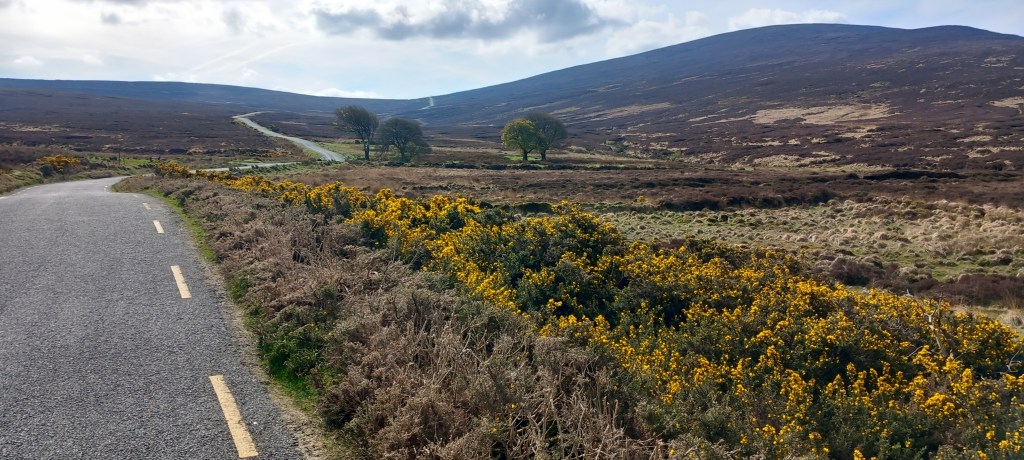
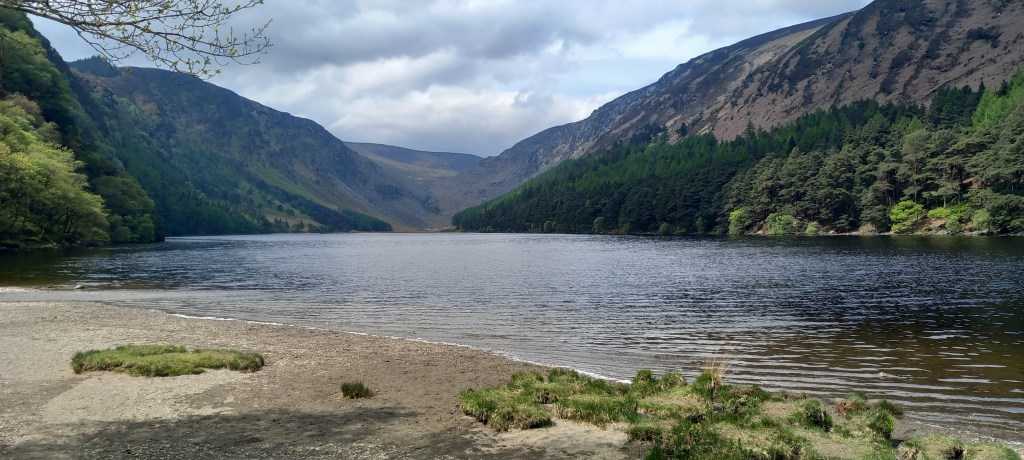
Driving south out of Dublin brings you to the Wicklow mountains which are a continuous upland area of heath, bog and grasslands, dotted with lakes and rivers. Blessed with good weather, we were treated to some fantastic views, much enhanced by the brightly coloured gorse everywhere. Very few parking areas are provided, and the roads are narrow – hence minimum photo opportunities.
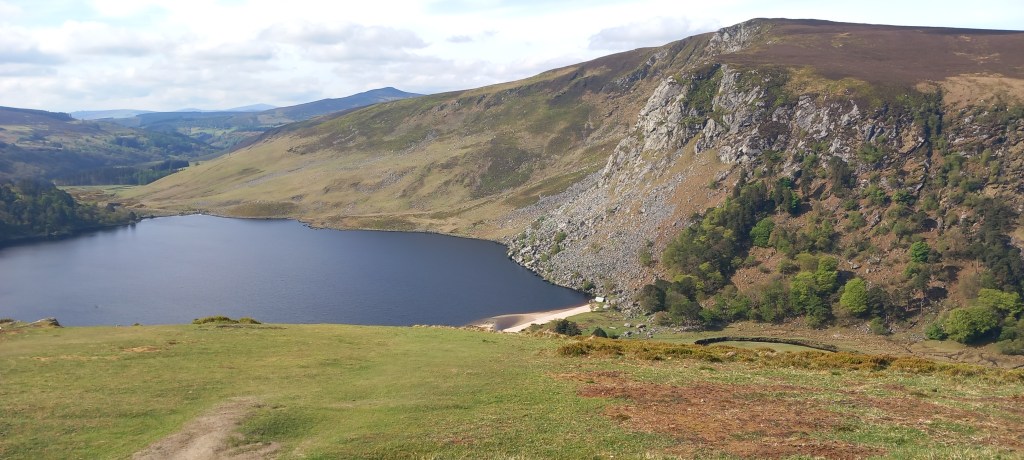
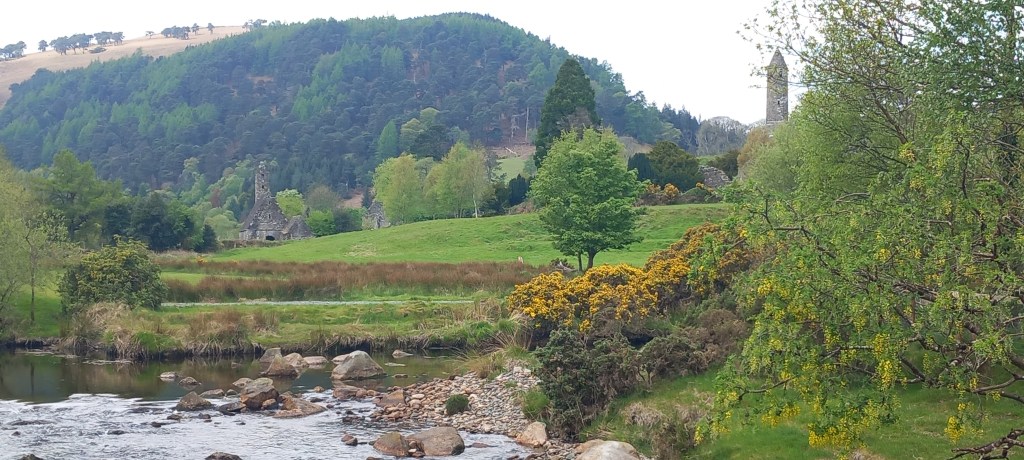
The ruins of the 6th century monastery at Glendalough are well interpreted and set in a beautiful valley. A well-preserved Round Tower takes pride of place amongst the centuries-old gravestones, and ruined buildings. This type of round tower is almost exclusive to Ireland – they were built at important church sites throughout the country during the 10th, 11th & 12th century.
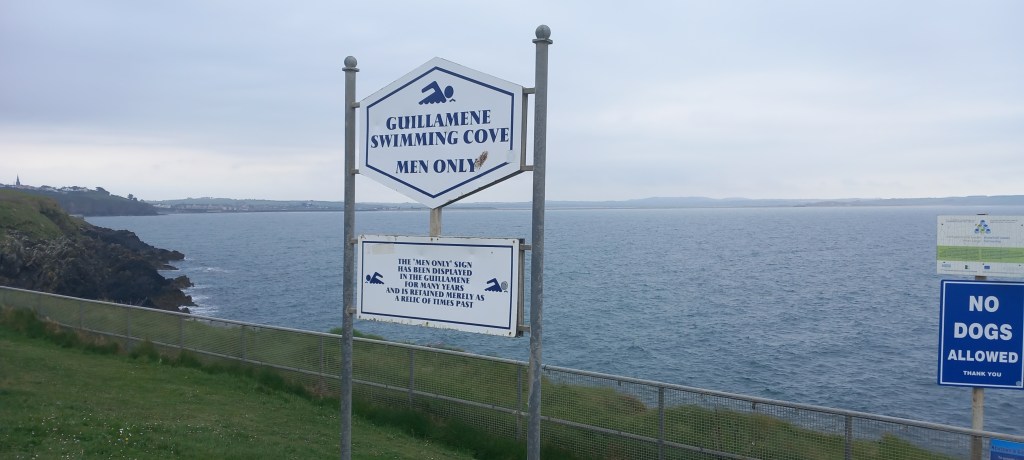
Tramore – Our campsite for the Bank Holiday weekend, is at Newton Cove on the south coast near Tramore. The cove itself is a ten-minute walk away and is a magnet for wild swimmers. We were amused by the Men Only sign, left over from the days of segregation of the sexes. There were just as many women in the water as men, despite cold winds and grey skies!
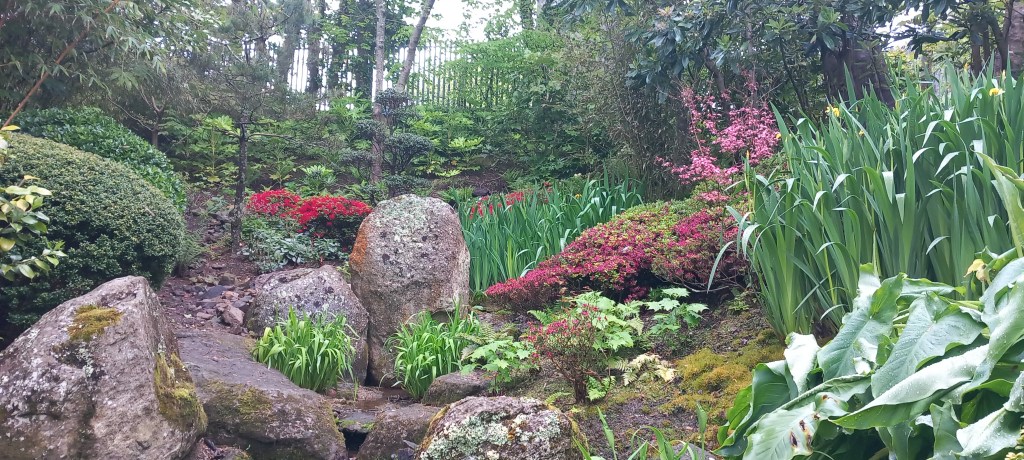
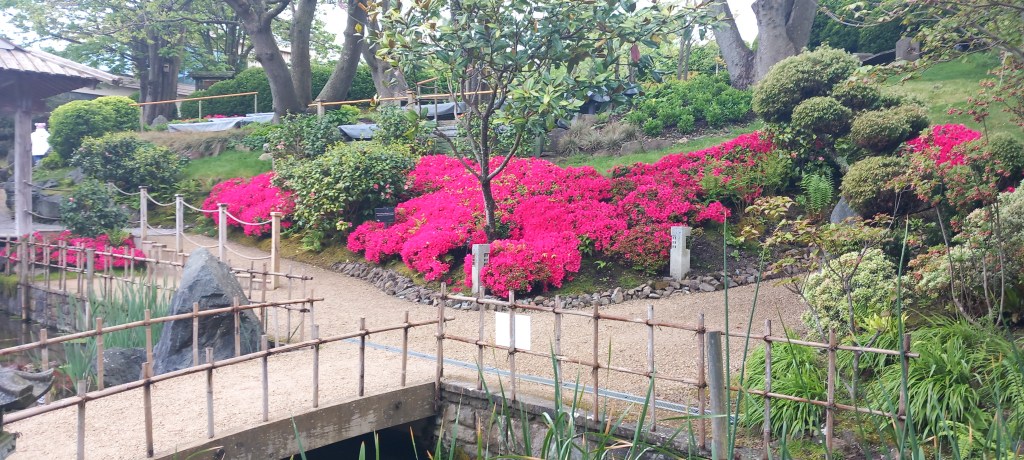
We couldn’t resist a visit to a Japanese Garden here in Tramore. It celebrates the life and work of Lafcadio Hearn, who spent much of his early childhood in Tramore, before settling in Japan. Cleverly designed around rocks and rock formations, the usual ‘tea house’ and little bridges over trickling streams all intercepted with bright swathes of colour in the azaleas and blossom.
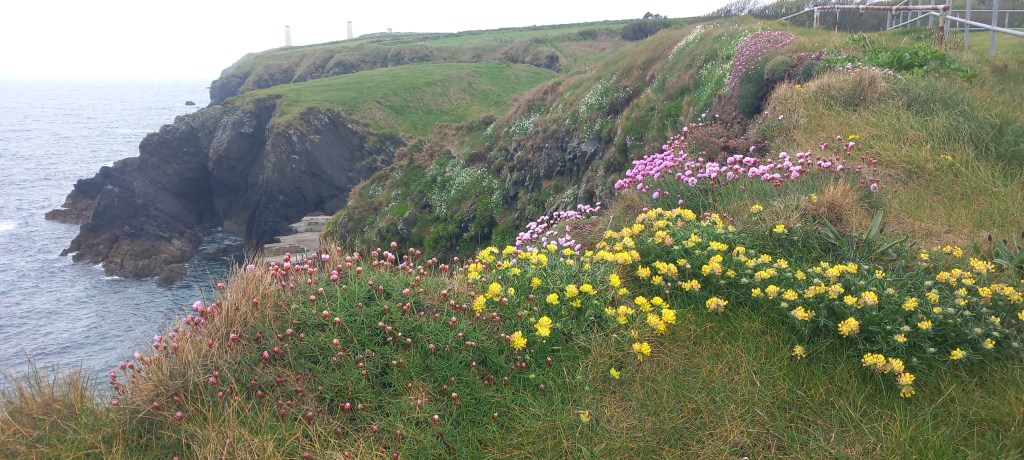
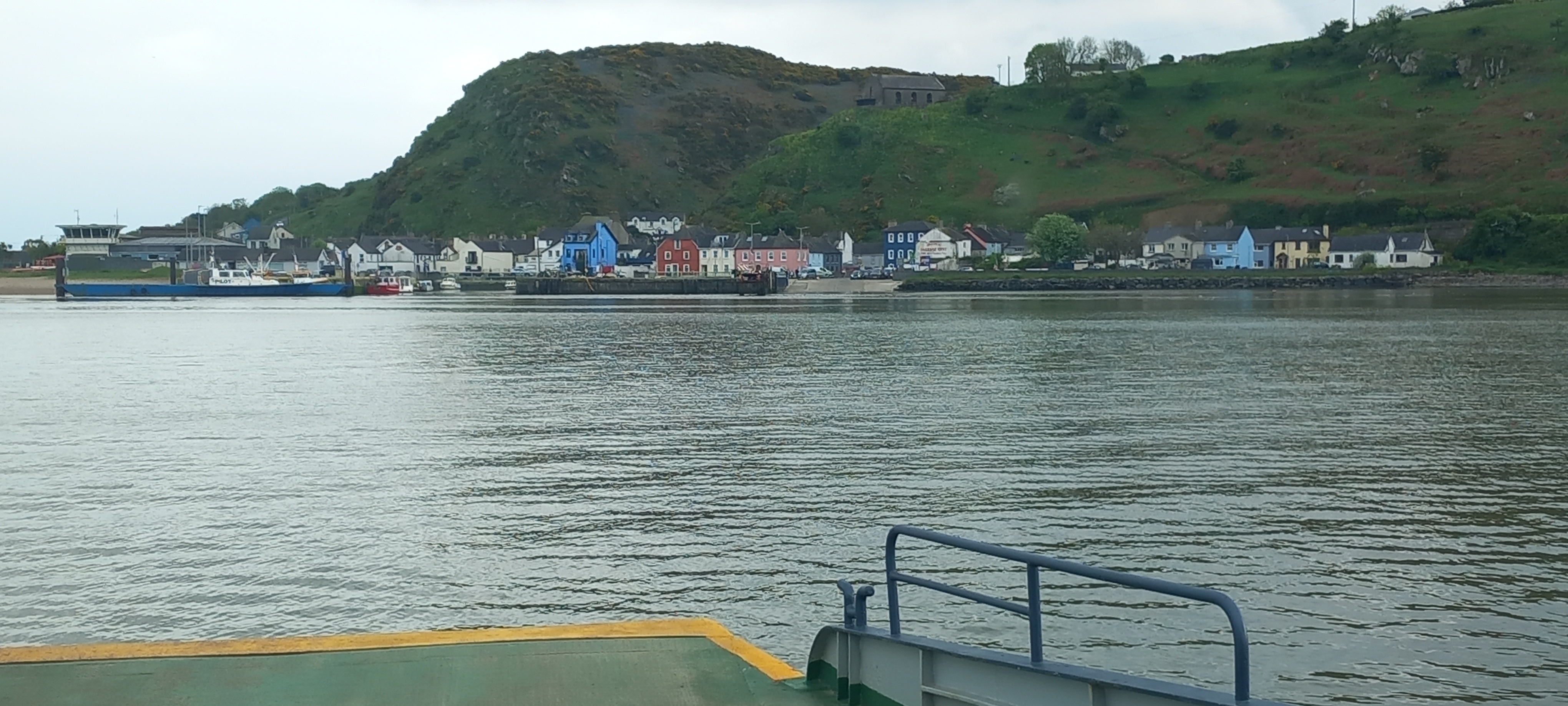
Hook A recommended drive around the Ring of Hook did not disappoint. The Hook Peninsula is to the east of the Tramore – with a convenient little ferry across Waterford Harbour.
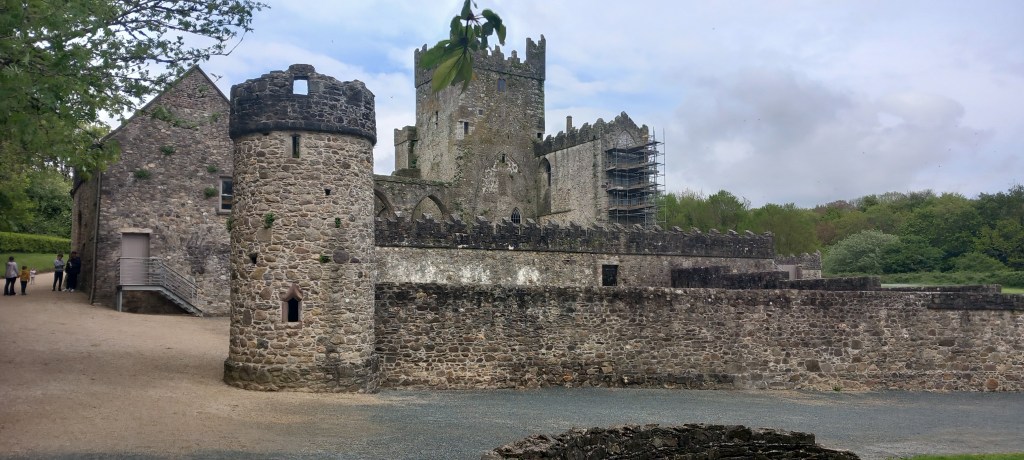
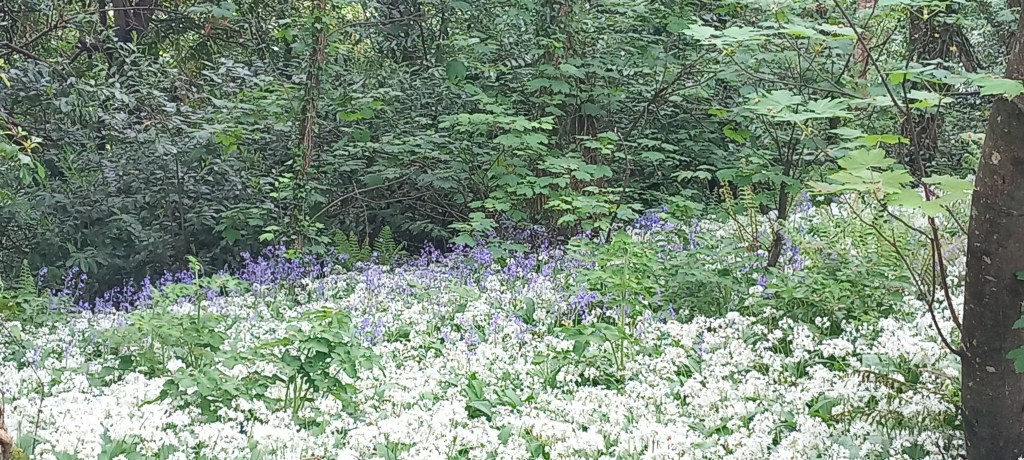
We were intrigued to visit Tintern Abbey (yes! you read that correctly) – the locals describe this as Tintern Minor, as opposed to Tintern Major in Wales! This Tintern was founded by Cistercian monks in the 1200s. After dissolution in the 1500s, it was granted to the Colclough family who modified the abbey and lived there for the next 400 years. The Georgian Walled Garden still exists today – another little gem! The great swathes of wild garlic and bluebells along the pathways were stunning.
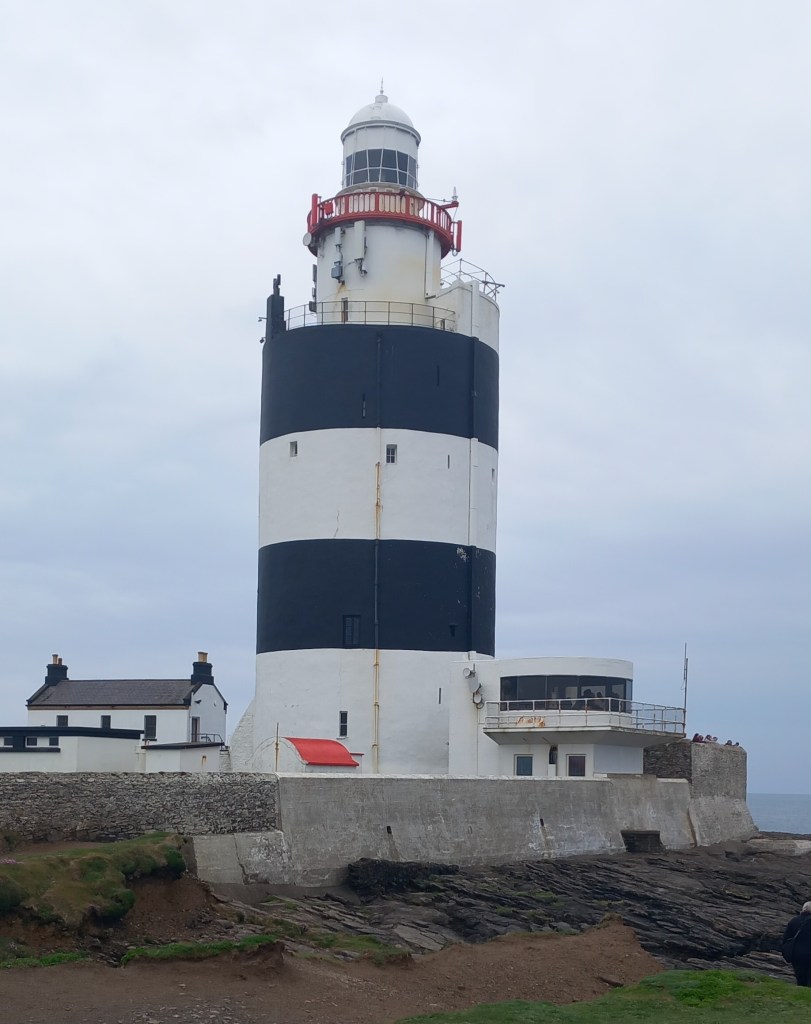
Hook point itself is dominated by the lighthouse, reputed to be the world’s oldest operational lighthouse.
Waterford – A twenty-minute bus ride from our campsite is the country’s oldest city – Waterford. It was established as a fortified ship haven by the Vikings in 914 A.D. Bad planning on our part meant that our visit was on Bank Holiday Monday when most shops and a lot of cafes and restaurants were closed. However, we were thrilled to visit the narrow streets and the harbour as well as the city’s gem – Waterford Crystal. Being a true foreigner, I have often wondered why people revere this particular crystal. An excellent tour of the factory was sufficient to ‘put me in my place’! From the hand-crafted wooden moulds (made from local beech) to the blowing area, on to the hand marking area where the intricate designs are marked. We were awe-struck watching the cutters holding the delicate crystal shapes to a diamond cutter, with their fingers being inches away from danger. The sculpting and engraving areas were just as riveting. It’s a five-year apprenticeship in whatever individual part of the process you fancy, and it’s then a further three years to qualify as a master craftsman. It was nice to hear that the master craftsman gets to keep the piece that he has presented for his final certificate. (worth £££££!)
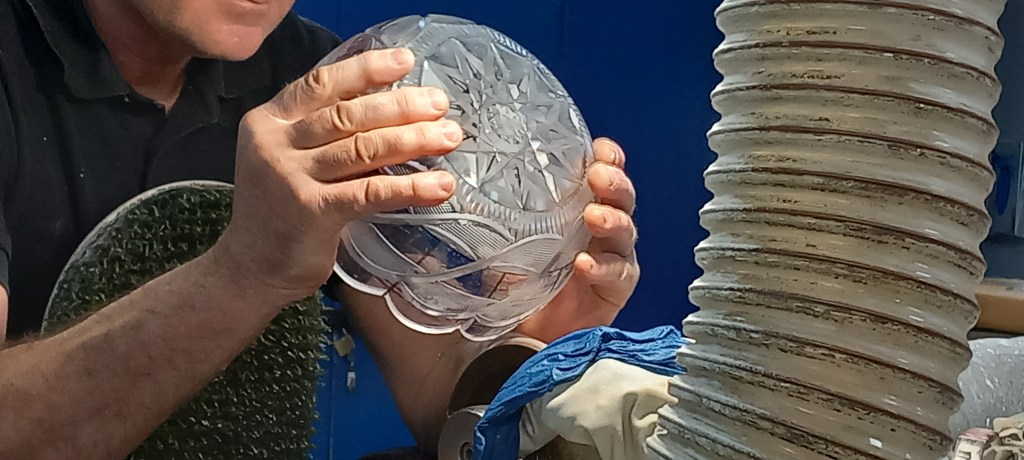
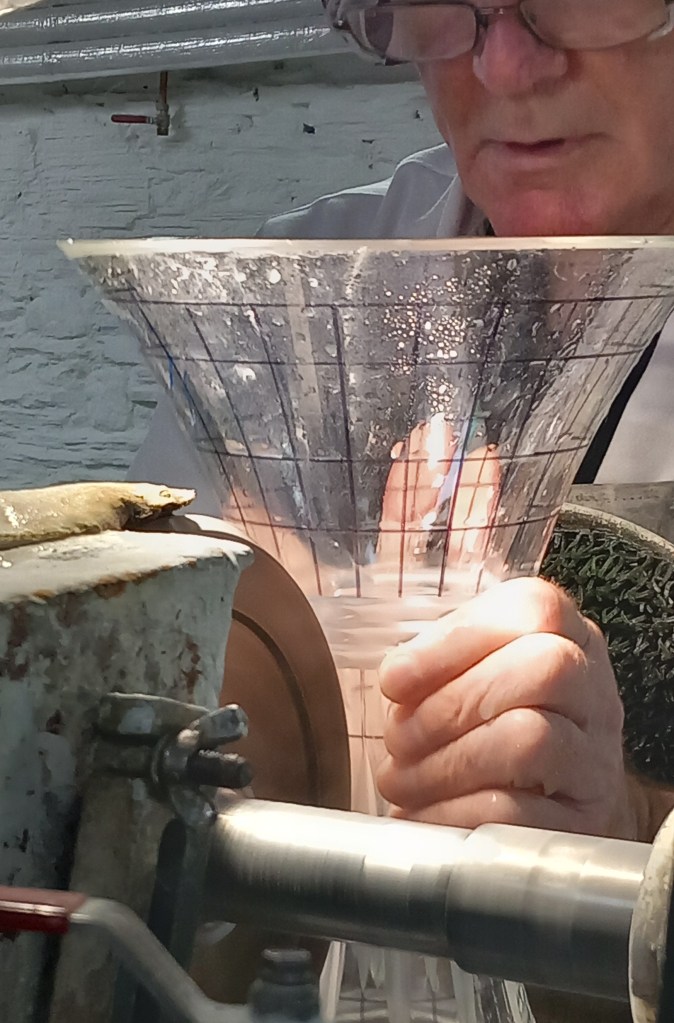
With each piece being made to such perfection, I can begin to understand the eye-watering cost of this exquisite crystal. Sadly, such an investment isn’t on the cards for us!
We move on to Cork and the Wild Atlantic Way tomorrow – see you next time. . . .
 Molly's Folks
What a brilliant ‘blog’ – so interesting and beautiful photos. (I loved the friar foxes!!) Coincidentally I was just walking back from bridge this evening past Penrice and wondered when we’d get the first instalment – and here it is! I hope the weather keeps fair for you. Anne xx
LikeLike
You have done so well so far. Hook lighthouse was built by William Marshall who also build Kilkenny, Chepstow and Pembroke Castles! You’ll meet another round tower at Ardmore; there are 100+ of them in the country. Keep enjoying it all.
LikeLike