Bermuda
Approaching our first port of call after 7 days sailing certainly created an electric atmosphere on the ship – despite Bermuda being covered in low cloud! We were mega-impressed by the efficient and speedy method of getting us off the ship and into the correct tour bus – Bermuda immigration rituals are very low key (we expect it to be VERY different when we enter USA for the first time!) Tiny, windy roads circumnavigate 22 inhabited islands of the 170 that make up Bermuda. A population of 65,000 make up these tiny islands which lie 600 miles from mainland USA. Life here is very expensive as everything needs to be flown/shipped in. The many famous people who own impressive residences here are not deterred however – our guide assured us that ‘they just come here to chill!’ Lush green hillsides are dotted with colourful houses – Bermudans are permitted to paint their houses in ANY colour, but roofs must be white and are all constructed of ridged concrete. The ridges collect rainwater which is then fed into underground water storage tanks – the only source of fresh water on the island. There are no high-rise buildings – everything is built to withstand the frequent hurricanes that plague the islands.


The tour highlight was a visit to the awe-inspiring natural grotto of stalactites and stalagmites which make up the Crystal Caves. Discovered by two young boys looking for a lost ball in 1907, we were blown away by the sheer beauty of nature – each stalactite begins with one drip of water and takes 100 years to grow 1 cubic centimetre! Stunning reflections glistened from the clear brackish water. The water is tidal, fed from the sea but made brackish (a mixture of fresh and salt water) by the rain-fed limestone from above.


A fascinating glimpse into life on the islands – ‘Glimpse’ being the operative word – the ship was moored for just 5 hours!
And we’re off to our next port of call . . . . .
Charleston
Despite being warned about possible delays through American immigration, there was still much chuntering to be heard, as many of us queued for an hour and a half before even entering the terminal building where immigration and security were taking place!
Long delays did nothing to dampen the spirits of our American friends Bill & Cleo who were waiting patiently to sweep us into downtown Charleston – how lucky we were to have ‘local guides’. Coffee in one of the multitude of cafes in this food paradise meant we could begin to exchange 15 years of news, before we set off on a self-guided tour of this historical city. Cobbled streets and horse-drawn carriages add to the old-world atmosphere. Pineapples are seen everywhere and are a symbol of hospitality.

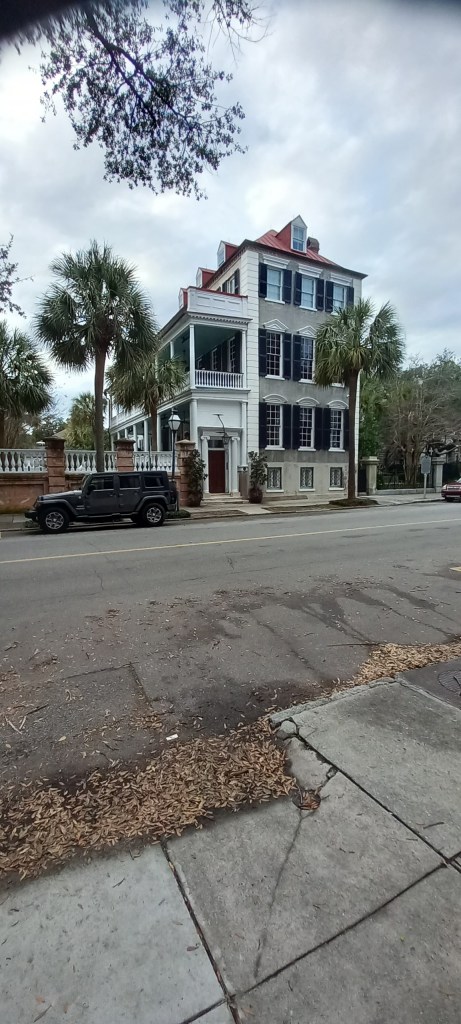
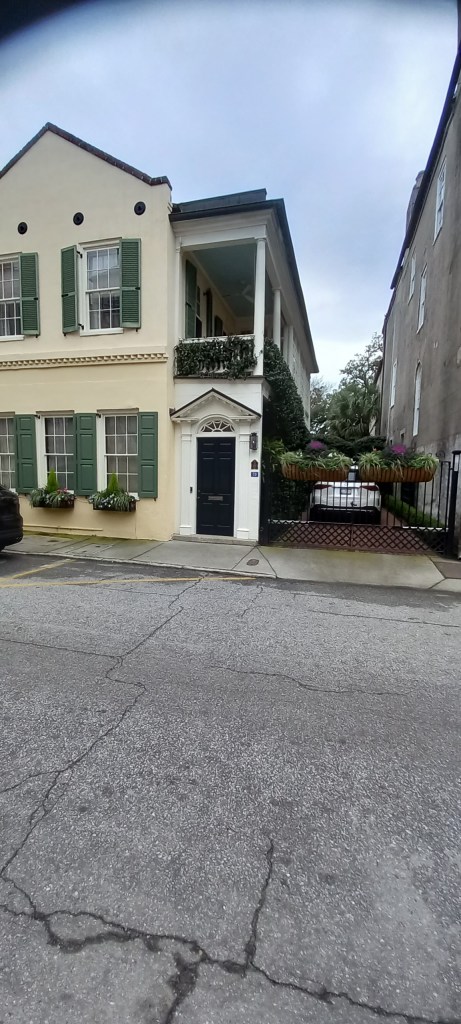
Founded in 1670, this area is renowned as the site of the first battles in the Civil War. Lying at only 6 metres above sea level, many houses have a raised front door with stairs approaching it from either side – everything below the front door level (the wine cellar!) is built to survive flooding. But it was the ‘single houses’ that we will remember Charleston for. Very narrow lots inspired the design whereby the front door is actually to the side of the property underneath a balcony or two (known as piazzas). The front door leads into a hall from which you reach a single room to each side. These rooms are literally the width of the house – just the two rooms to each floor. The icing on the cake is the fake front door that faces the street, and provides privacy for the outdoor area under the piazzas.
We were treated to a little trip out of town this morning – the temperature here was only 7C!! but brilliant blue sky and sunshine. We visited the Boone Hall Plantation which was set up by an Englishman – John Boone in 1681 with 100 acres of land. Just to make sure you know what I’m talking about . . . a plantation was an estate or farm that produced a single market crop with the forced labour of enslaved people. We learnt that various owners used the knowledge, skills and labour of enslaved people to produce crops, make bricks, serve the family and carry out the many tasks necessary to run such a huge affair. Rice, cotton and indigo along with enforced African slave labour are said to have made this area home to some of the richest families in the American Colonies. It was an eye opening experience but we were comforted by the fact that slavery was abolished after the American Civil War.

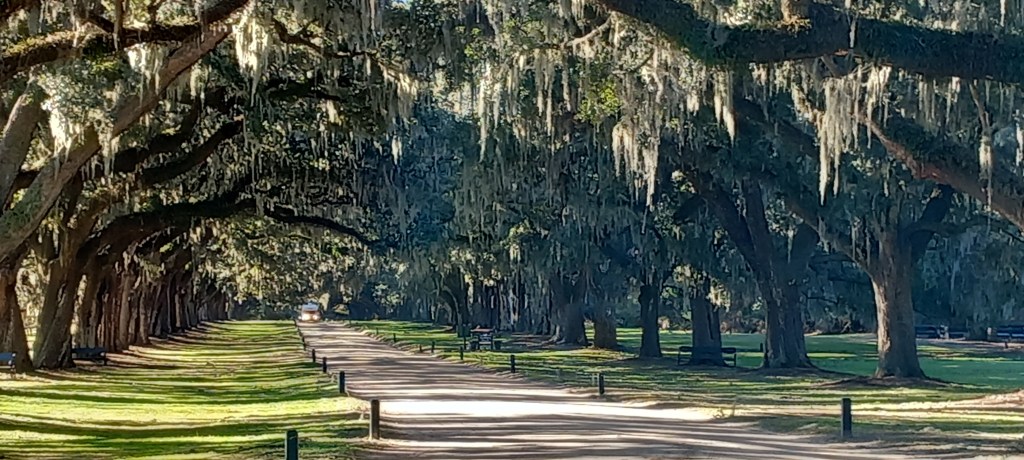
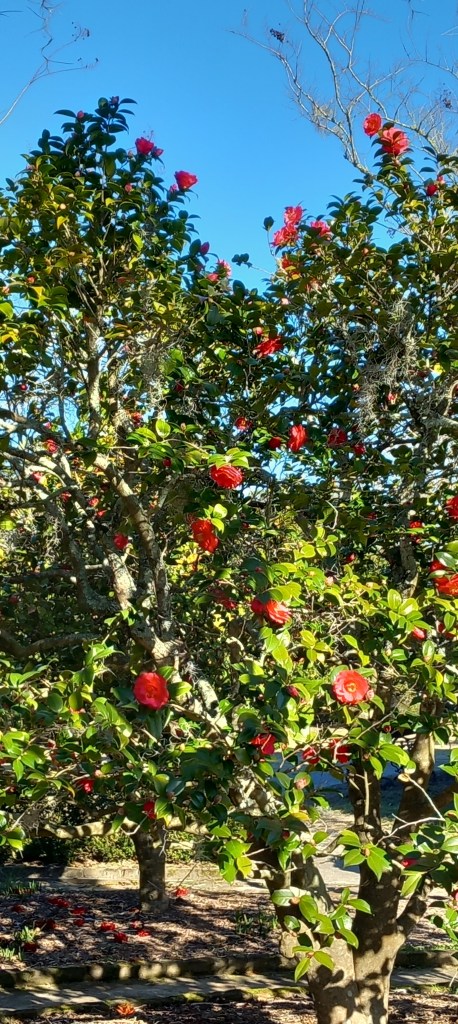
The camelias were in bloom in the extensive gardens and driving along the Live Oak Tunnel, as seen in so many movies, was a joy. These Live Oaks are named as such because they are never without leaf. They lose their leaves as the new ones form. The swathes of Spanish Moss create a dramatic atmosphere.
Huge thanks must go to our lovely friends Bill & Cleo – there’s nothing so special as being shown around by local experts!
And so we sail on . . . . . .


It looks wonderful, bright but very cold here.
Sent from Yahoo Mail on Android
LikeLike
Fascinating read. Keep them coming! -4 in the Wye Valley this morning but glorious blue sky and frost-laden valley made for a super photo opportunity.
Nadine
X
LikeLike
Visited Charleston many years ago. Looks still as stunning. I remember the houses. Infact I think I might have taken the same photo!
LikeLike
Great write up Marlyn. It sounds as though you are having a great time. What wonderful memories you are making. I’m looking forward to your next report and continue to track you on my app x
LikeLike
Two very special places. Sorry you had so little time in Bermuda. Xx
LikeLike
What a wonderful adventure! Many thanks for including us in your travels. And I am learning things, as I didn’t realise that Bermuda consisted of so many islands. I look forward to learning even more. Happy sailing!
LikeLike
It sounds wonderful! J
<
div>
Sent from my iPhone
<
div dir=”ltr”>
<
blockquote type=”cite”>
LikeLike