My apologies to those who missed a notification about the North Holland blog – I can never tell who’s received it as this is in the hands of WordPress! Hopefully you can catch up this week. . . . .
Crossing the border into Germany went almost unnoticed – there was no ‘Welcome to Germany’ sign, just a sign for a change of province. However, just as we tend to notice a difference between counties in UK, there were noticeable differences in the countryside in Germany. Houses seemed bigger and appeared to be on bigger plots. The crops were no longer all those vegetables which end up in UK supermarkets. Now we saw grains of every type, as far as the eye could see. Wheat, oats, barley, and maize. AND . . . .very slight inclines in the landscape began to appear – the total flatness had disappeared. Large, wooded areas became the norm, in contrast to The Netherlands, where it seems that every square metre of ground is used to grow things for market.
We stopped and made coffee (as we do!), then took the opportunity to take a walk in the woods . . . .

As mentioned before, all campsites have been prebooked for this journey, as we were warned that it was high season (only two have asked for a deposit in advance, so if we change our route for some reason, we can ring and cancel). Imagine our surprise when we found ourselves on a German Camping Club site! A tiny, wooded site in the middle of nowhere (very much our sort of site!) with 9 caravans parked for the summer. Danny, with whom Peter had been communicating, had been quick at answering emails and was keen to welcome us. However, he spoke no English and had pressed ‘translate to English’ on every email. Lunch in the clubhouse was just ending, and a kind chap, who spoke some English, stepped forward to give us the site information. We relaxed in the sunshine for a couple of hours but were then driven inside as the mosquitoes came out!! The grass was not cut short – in fact, we were very much in a field! We had a disturbed night thanks to the bugs and then a HUGE thunderstorm awoke us at 5am – all part of the excitement, but at least we were up and away in good time.
German Autobahn driving has been interesting – 130km speed limit feels SO FAST when Molly is running along sedately at about 100. Even so, a 60 km loop to the south of Bremen seemed to take us no time. We then returned to our beloved back roads through lovely wooded areas and spacious, tidy villages. Our campsite on the edge of Hamburg, had lovely big spaces and good facilities – all of which made up (just about!) for the constant noise of the motorway which was right beside the site. Luckily two long days of sightseeing in Hamburg meant we slept through any background noise!
And so, to Hamburg – another city, in another country, and very different from Amsterdam. Hamburg is a city of two lakes – the Inner Alster and the Outer Alster – which were created when the Alster river was dammed during the 12th century.
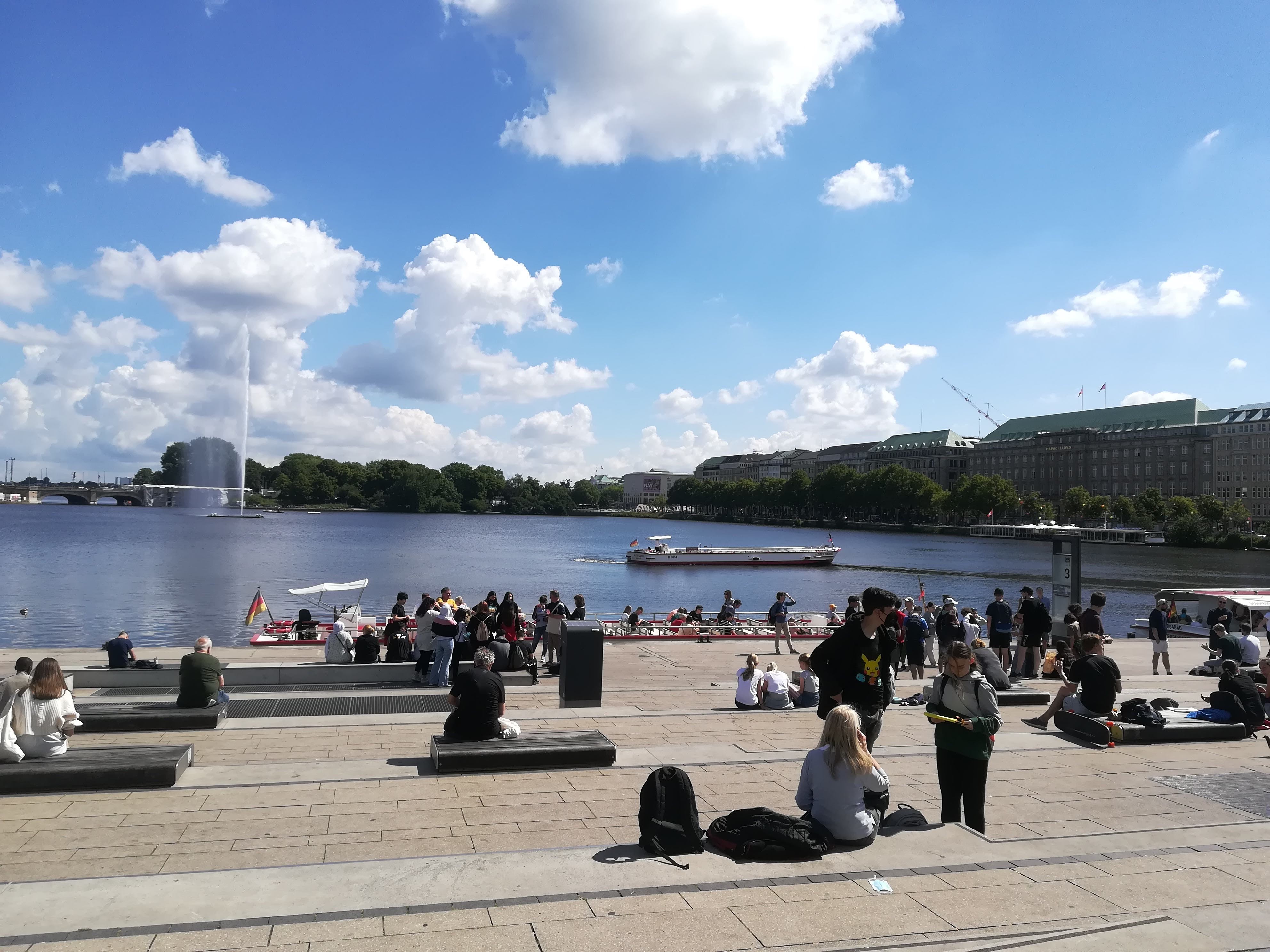
There is a maze of very wide canals which link the lakes to the River Elbe, which flows out to the North Sea – hence the canals are tidal. Hamburg has more bridges inside its city limits than any other city in the world and more canals than both Amsterdam and Venice! It is the country’s largest port and apparently, the third busiest port in the world.

Monuments and interesting buildings abound, so I will cover just a few.

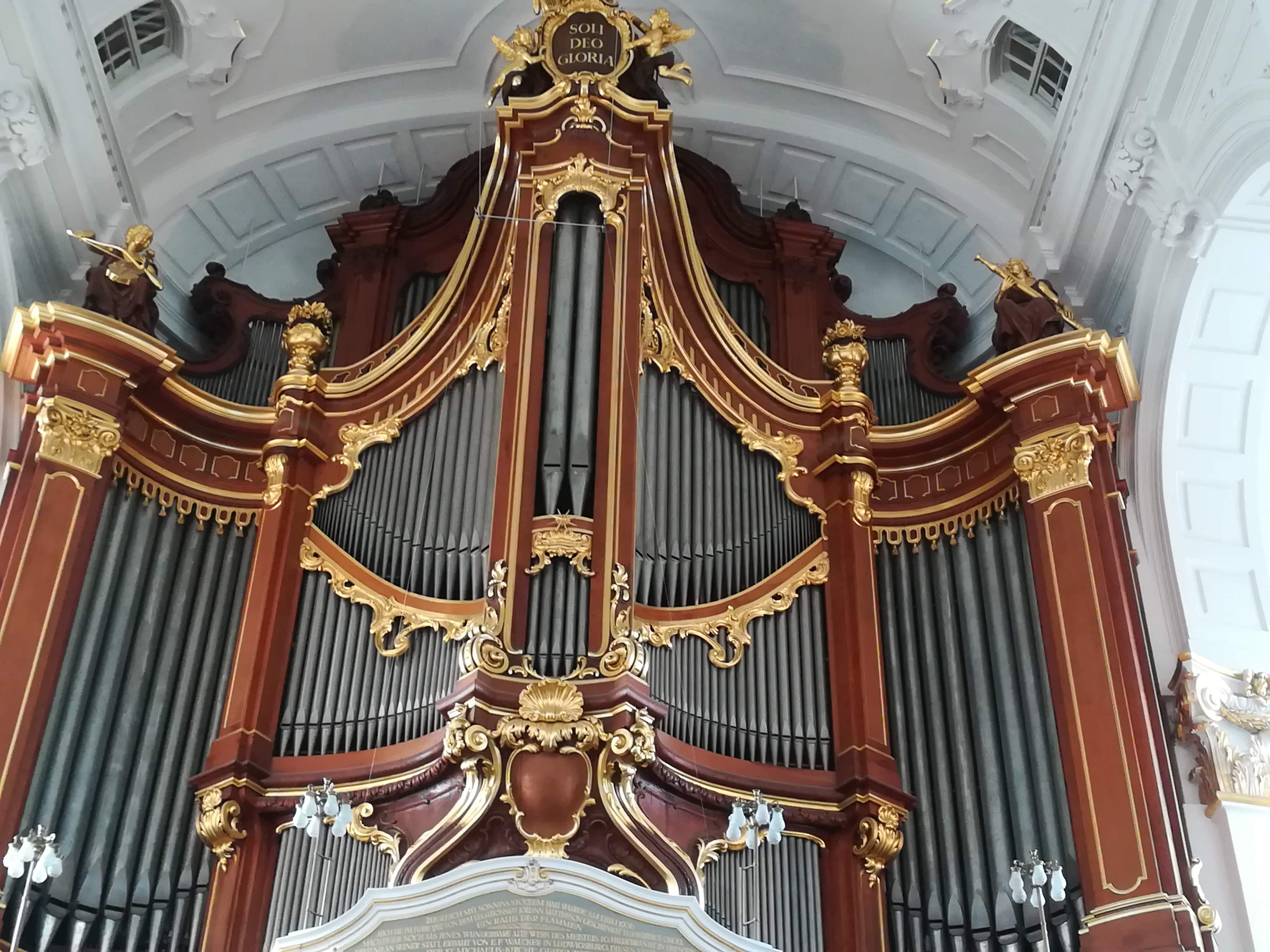
St Michael’s church is one of the famous landmarks in the city. We were lucky enough to hear one of the six (yes, six!) organs being played in rehearsal for a concert.

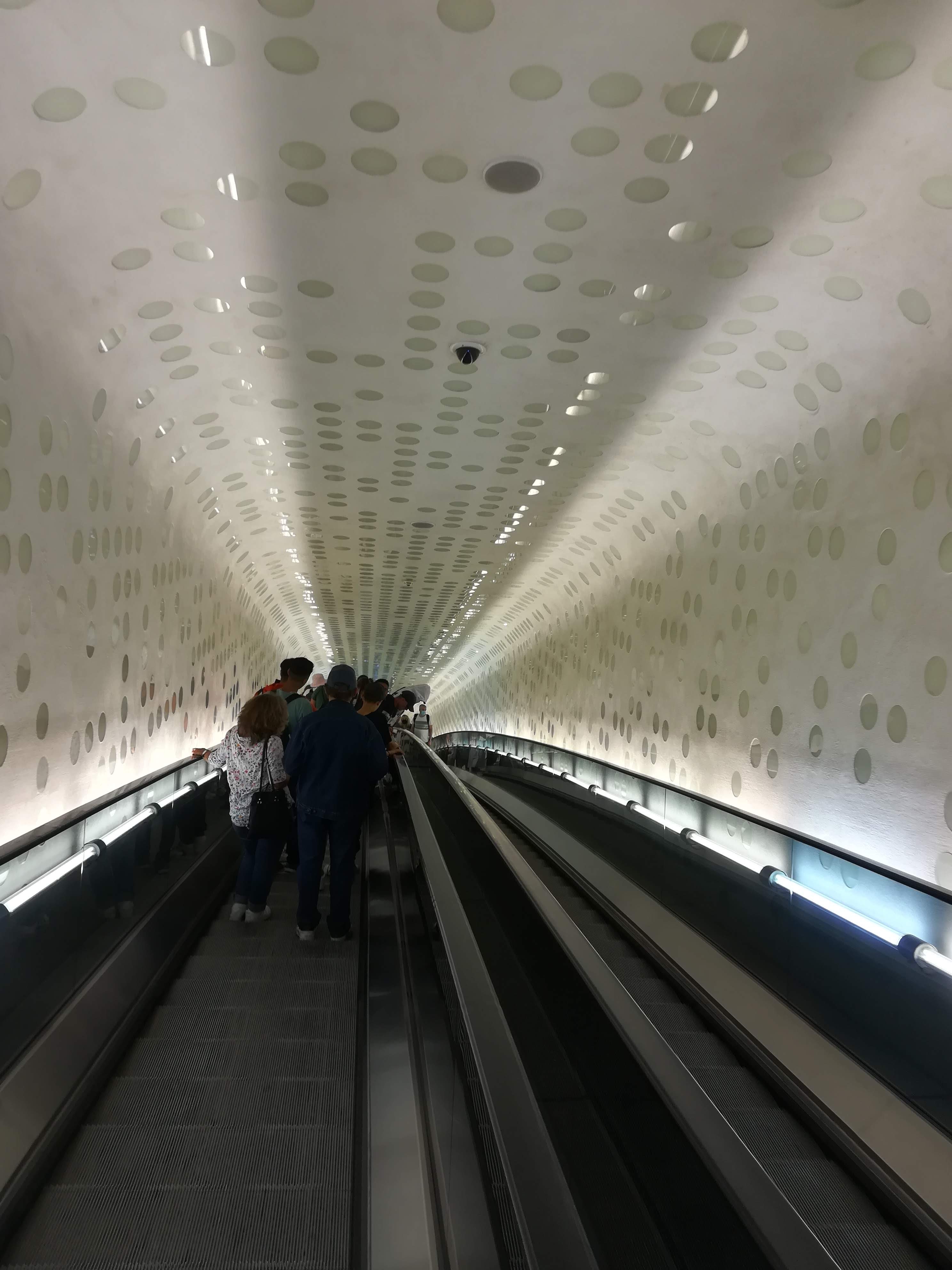
Hamburg is being rebuilt in every direction and on every street. Many of the old warehouses along the canals are being transformed into luxury apartments. One set of warehouses forms the base of the Elbe Philharmonic Concert Hall, an amazing architectural feat with 1047 panes of glass. There is a spectacular plaza at ‘top of warehouse’ height with far-reaching views of the city. Visitors are taken there via a splendid 80-metre-long arched escalator. The journey takes two and a half minutes and at no point can you see both the top and the bottom at the same time – amazing!

One of the main modes of transport are the ferries. We enjoyed joining the locals on their way to or from work and found it a good way to enjoy views of the various parts of the city.


Our journey from campsite to city centre involved a 5 min bus ride, followed by a 20 min metro ride. Regulations are still in place here for using facemasks on all public transport. Luckily we still had some on Molly! There are no ticket barriers in stations, on buses, or on ferries – you are required to buy a ticket (luckily we got a very cheap deal) and there are ‘frequent spot checks’. Over two full days in the city, jumping on and off buses, tubes and ferries we never once saw a ticket inspector. I hate to imagine how many thousands of people travel without buying a ticket – or perhaps I’m underestimating the discipline of the Germans!
After the heat and bustle of the city, we found some welcome relief in the shade and trickling streams at the Planten un Blomen – a 47 hectare park of plants and flowers . The roses were stunning, and the fountains gave a dramatic hourly display


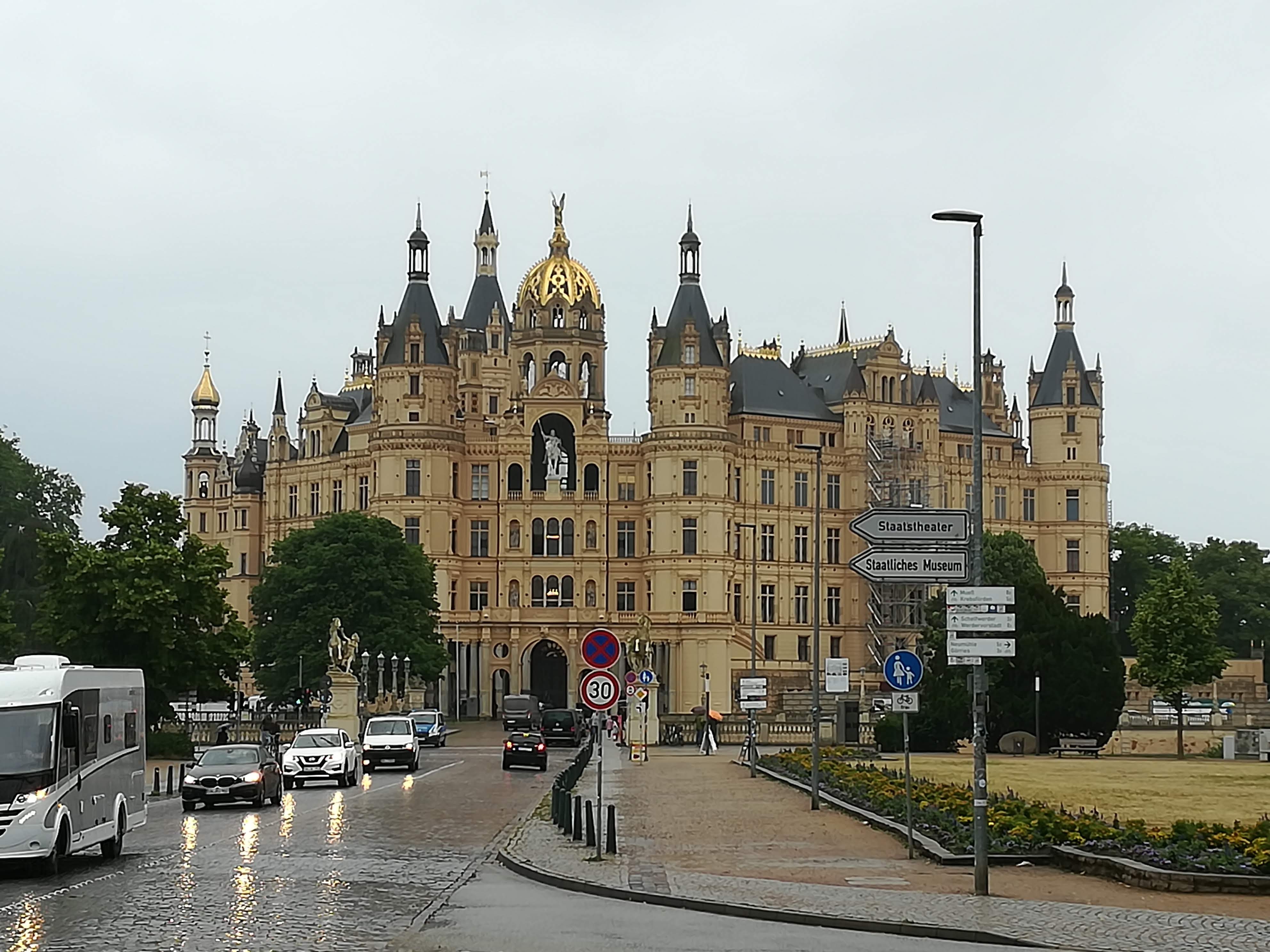
Heading north east, we did a quick visit to Schwerin. Surrounded by seven lakes, the town is known for its castle. Situated on an island in the middle of Lake Schwerin, this frequently restored 14th century building now houses the provincial parliamentary offices. The state rooms provided us with welcome respite on a day of rainy weather.

The city of Lubeck lies near the bottom of the Jutland Peninsula (between the North Sea and the Baltic Sea) in the state of Schleswig-Holstein. Known for its role as one of the founding cities of the Hanseatic League, it is FULL of historic buildings, and is recognised as a UNESCO World Heritage Site, despite being badly bombed during WWII. The 14th Century Holstein Gate takes its place of honour at the entrance to the city.

The European Hanseatic Museum gives the full story – well interpreted – what did we do before WIFI & QR codes? Quite apart from the story of the Hanseatic League, I found myself wondering where the word ‘hanse’ comes from? It is derived from an old German word which means ‘group or band of people’. Since the 12th it has been used to denote “communities of long-distance merchants”. (today’s bit of trivia!) Suffice to say, that we spent a pleasant day, in a city very deserving of its UNESCO heritage.
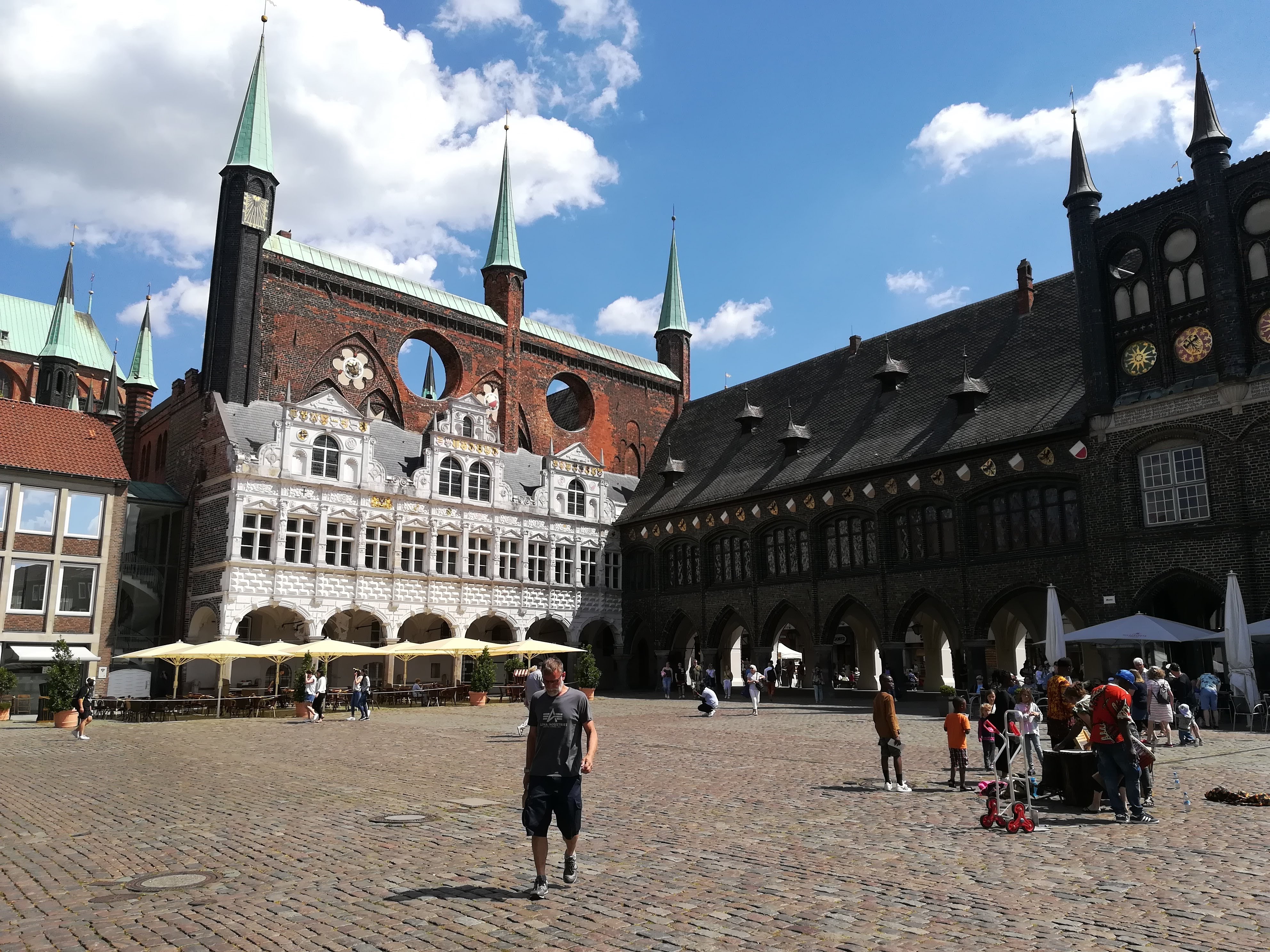

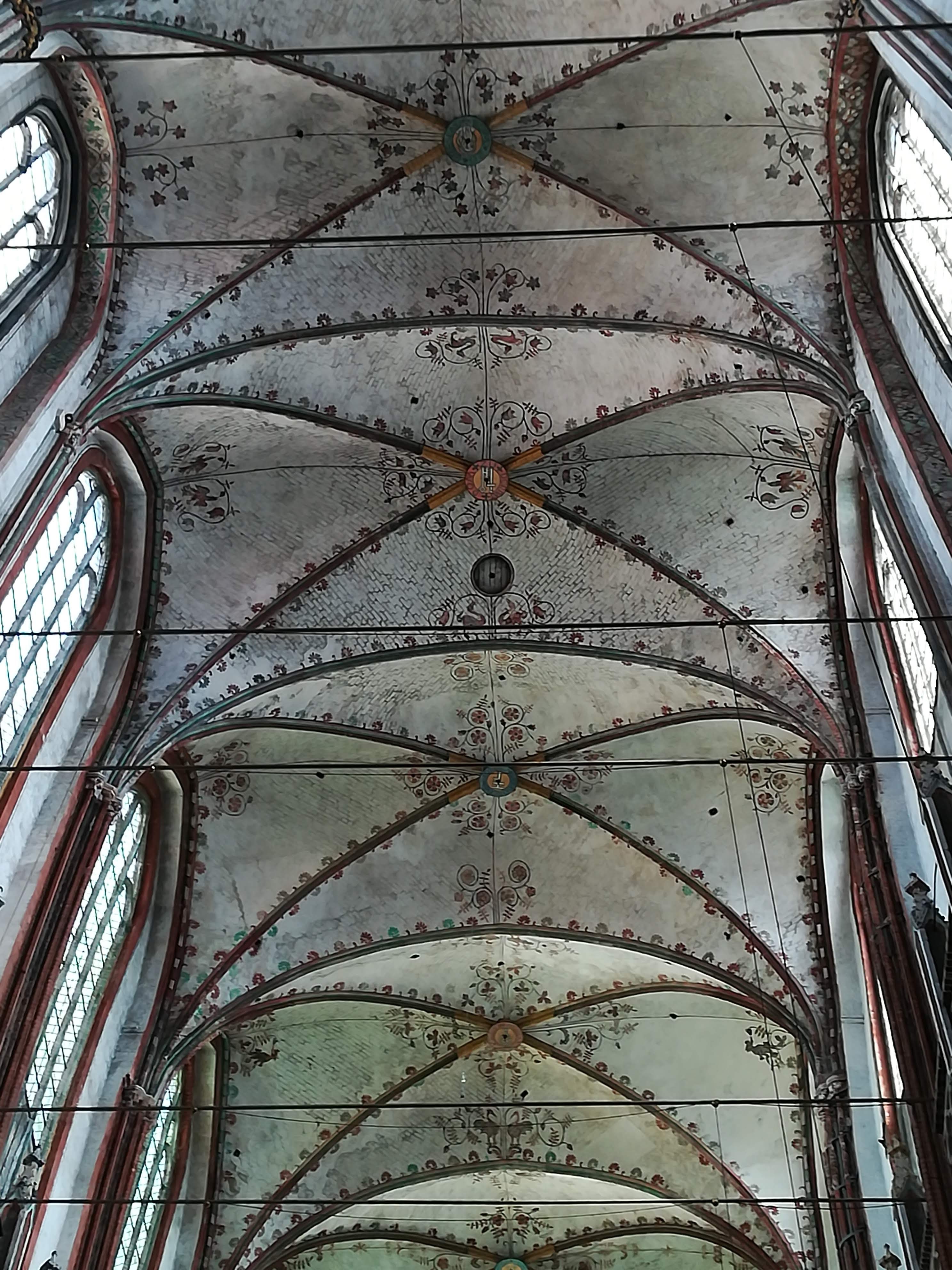

We’ve now crossed an inlet of the Baltic Sea to Denmark. More next week.
 Molly's Folks
Thank you again for tour adventures. Great to read. Judith had a heart attack, mild, in the early hours of yesterday and is in Hereford hospital, probably all this week. Fingers crossed all will be dealt with. Much love, William
>
LikeLiked by 1 person
My sister who has lived in Germany for the last 46 years can confirm the Germans are very disciplined in things like buying train tickets etc. and inspectors do appear as her daughter found out once in her teens. Enjoy Denmark.
LikeLiked by 1 person
Looks wonderful, thank you for all the information, I have already learnt something about Hamburg, I didn’t know there were so many canals. Enjoy.
LikeLike
Hamburg looks wonderful. I had it in my mind that it was highly industrial and therefore not really beautiful. I am delighted to find out I was wrong.
LikeLiked by 1 person
Wonderful keep them coming
LikeLiked by 1 person