Outer Hebrides – September 2021
Well, we wouldn’t be Marilyn and Peter if we didn’t want an adventure! “Let’s head for the Outer Hebrides” we said. “That’ll give Molly a good run!”
A last-minute change by CalMac, to our ferry booking (both time and departure point!) meant two longer days travel than planned. Setting off from Penrice at 06:30 gave us a good start and we happily pulled into a friend’s driveway near Stirling at 5pm having taken good breaks for breakfast, coffee, lunch and tea! Thank you Alice and Clive, for providing Molly with electricity and water . . . . .
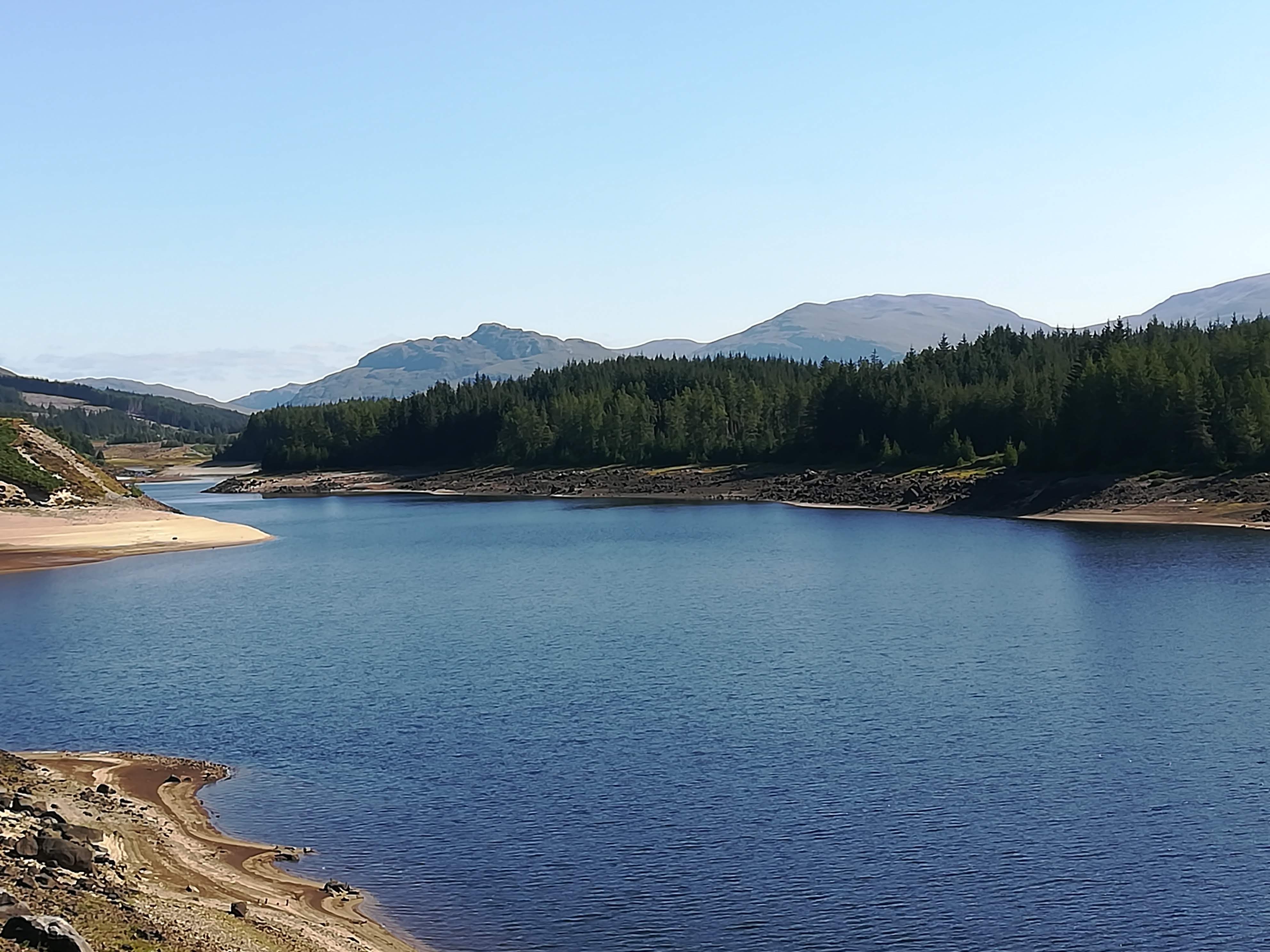
In brilliant sunshine and warmth (were we REALLY in Scotland??) the journey across the Highlands . . . Stirling to Perth. .to Spean Bridge. . to Kyle of Lochalsh was spectacular. Scottish news is full of the lack of rainfall and their freshwater lochs are indeed very low.
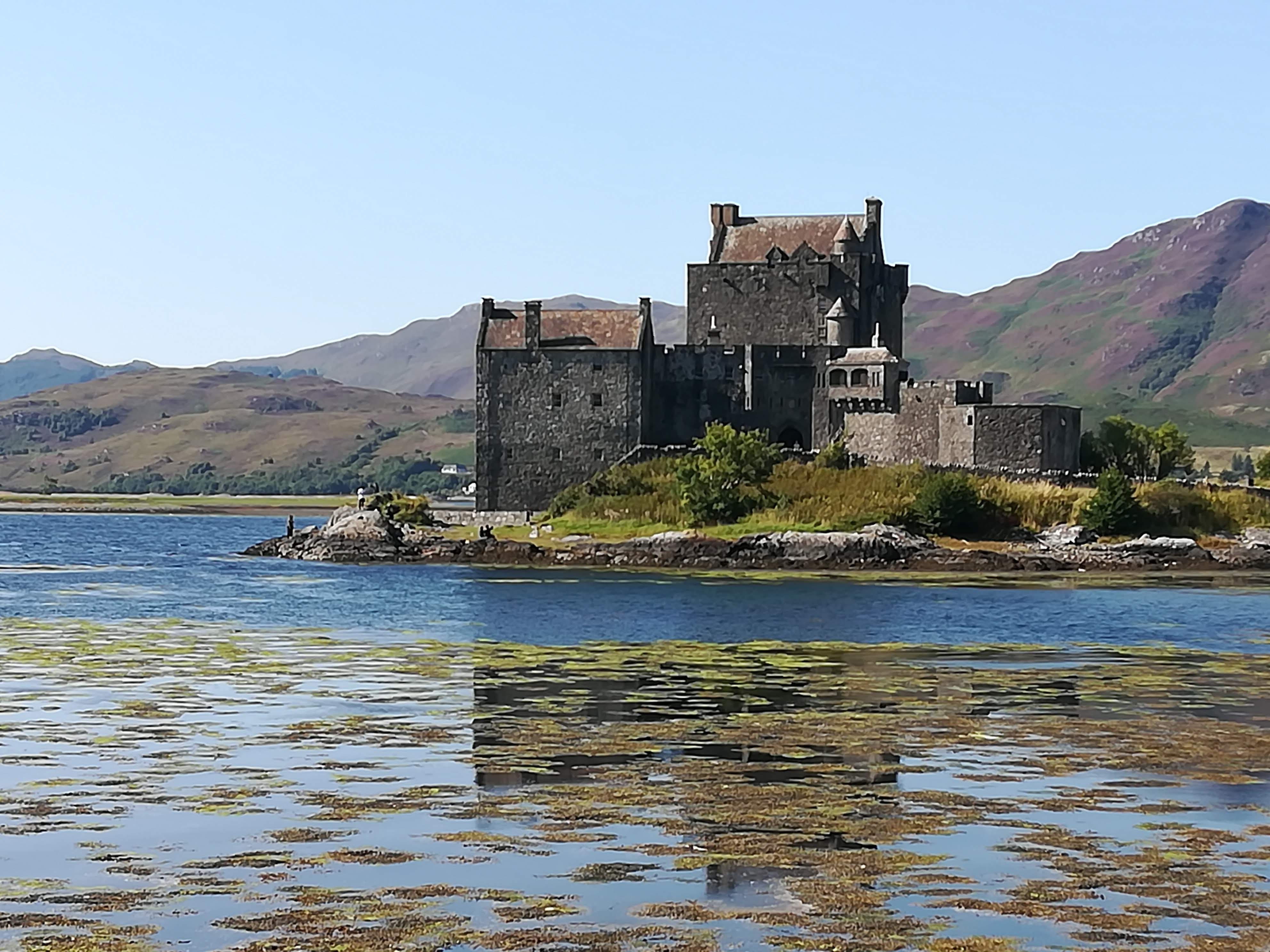
We passed the well-known Eilean Donan Castle (as seen on many a postcard and any Scottish tourist information). For those of you with an interest in history, this is a castle on an island (a bridge now joins it to the mainland) originally built in the 13th century but destroyed in 1719. The castle that we see today is a 20th century re-creation!
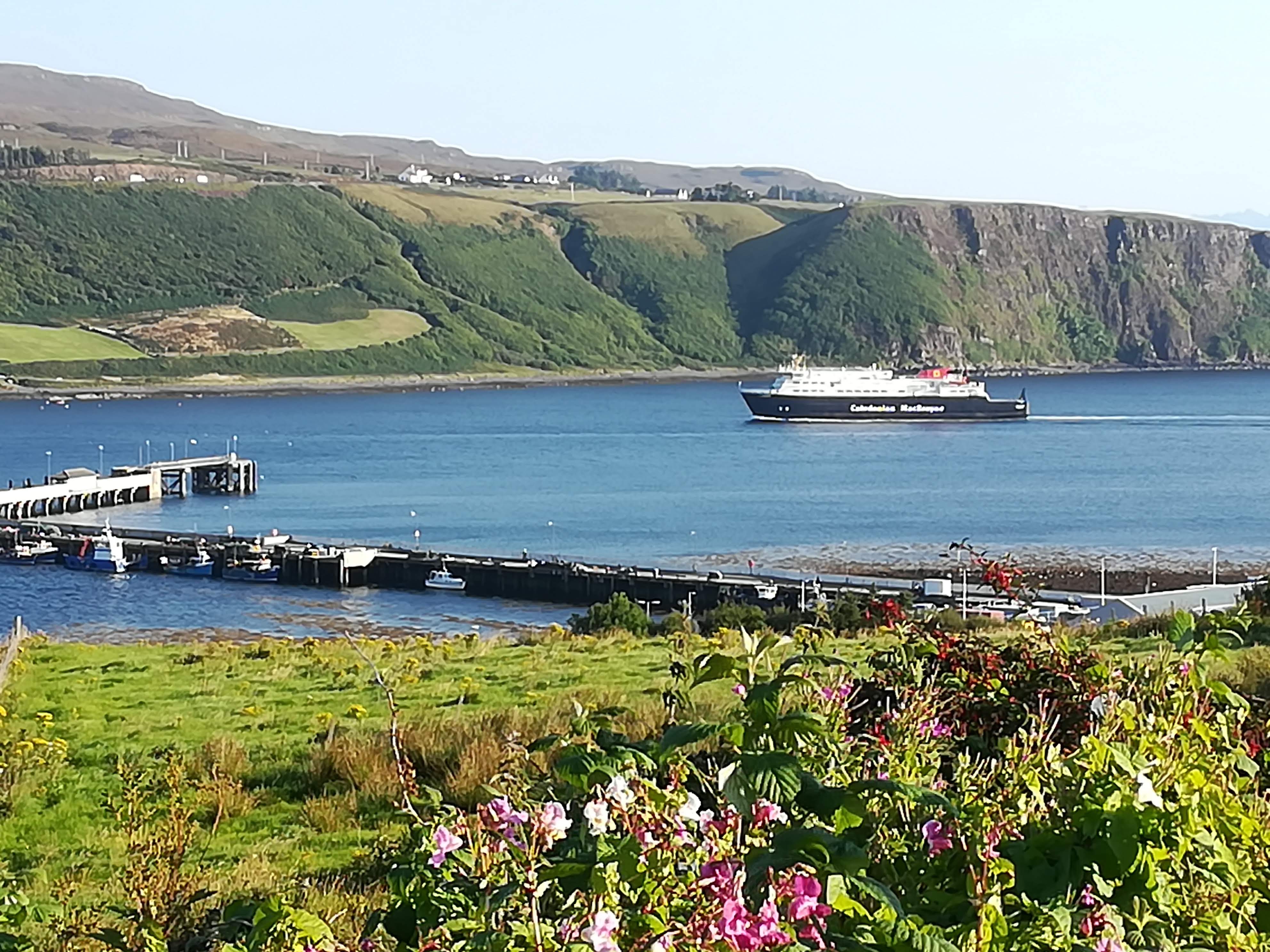
Crossing the bridge onto the Isle of Skye, we arrived in Uig in the far north-west by late afternoon. Plenty of time for a good walk whilst watching the ferry come and go on its evening sailings.
North Uist:
We were blessed with a smooth, calm crossing with very few passengers onboard, in brilliant sunshine, to Lochmaddy on North Uist.

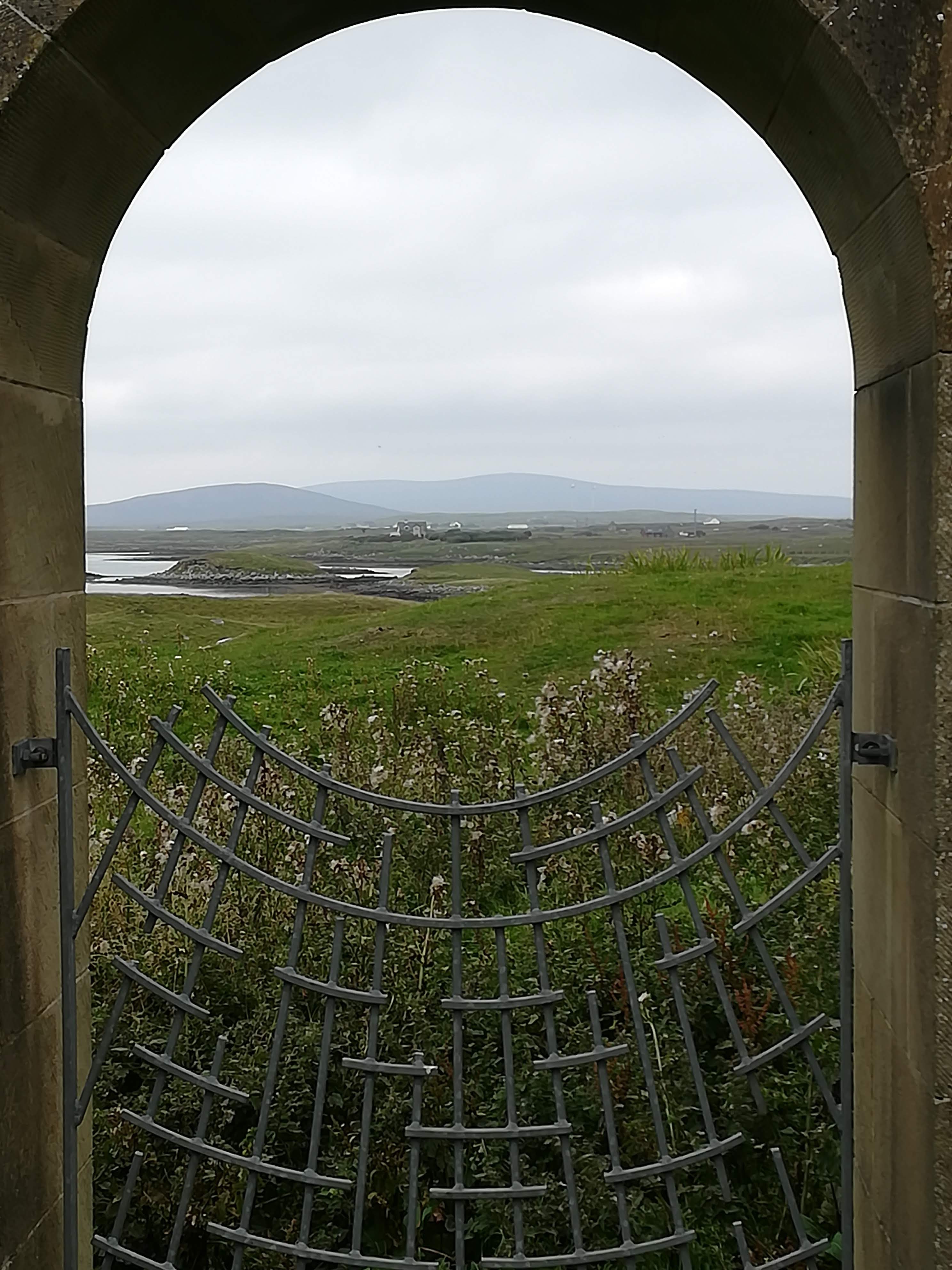
Deciding to take advantage of the changed ferry booking, we visited a couple of historic sites on our journey south. Sadly, we lost the sunshine pretty quickly and returned to the ‘grey’ skies we’d been used to at home! After two long days drive, exercise was needed! We walked uphill to Barpa Langass, a burial chamber thought to be 5000 yrs old and that of a Neolithic chieftain. He certainly enjoys wonderful views from his resting place!

We walked on to an ancient stone circle – said to be the oldest and finest in the Western Isles – and known (in English) as Finn’s People. It’s in a beautifully wild location overlooking one of the many sea lochs.

Further south we stopped at Trinity Temple. This ruin was originally a medieval monastery and college founded (believe it or not!) by a woman in the 13th century. It is a peaceful and atmospheric site and is listed as ‘possibly’ being Scotland’s oldest university.
Religion:
Much of the population in the south of the islands is Catholic. There are many small statues of the Madonna, but Our Lady of the Isles takes your breath away. At 30 ft tall, she is the tallest statue in Britain and is cleverly placed alongside the Ministry of Defence Rangehead. Islanders want the army to remember that there is a spiritual world as well as a military/materialistic world.


Note that the Madonna holds Christ by her shoulder as a child, rather than cradling a baby in her arms.
South Uist:
Loch Druidibeg Nature Reserve
The possibility of seeing local birds and wildlife encouraged us to take a signed walk across this nature reserve. Open moorland in the Outer Hebrides signal bog! The familiar spongy ground, peppered with the odd squelch as our boots sank into the wet peat, over some 5 miles, woke up some underused leg muscles! A multitude of grasses and heathers delighted the eye. The waters of Loch Druidibeg gently lapped against the rocky inlets. Did we see any wildlife? NOTHING! Apart from some Shetland-type ponies which roam the islands in a controlled manner so that they don’t eat the wildflowers before the flowers have dropped their seeds.
Round Houses:
Nestled in the sand dunes on the east coast of South Uist are the archaeological remains of several Bronze Age round houses at Cladh Hallan. Recent analysis has unearthed (excuse the pun!) human bones thought to be the first ever mummified skeletons in Britain. Composite skeletons make up one child and two adults. . .yes, you read that correctly! Each ‘mummy’ is comprised of a head, a jaw and a torso from different bodies. When research is completed each ‘body’ will have a new home – one in the Kildonean museum on South Uist, one in the museum in Stornaway and the third in the National Museum of Scotland in Edinburgh. Make a note in your diaries if you’re passing in years to come!
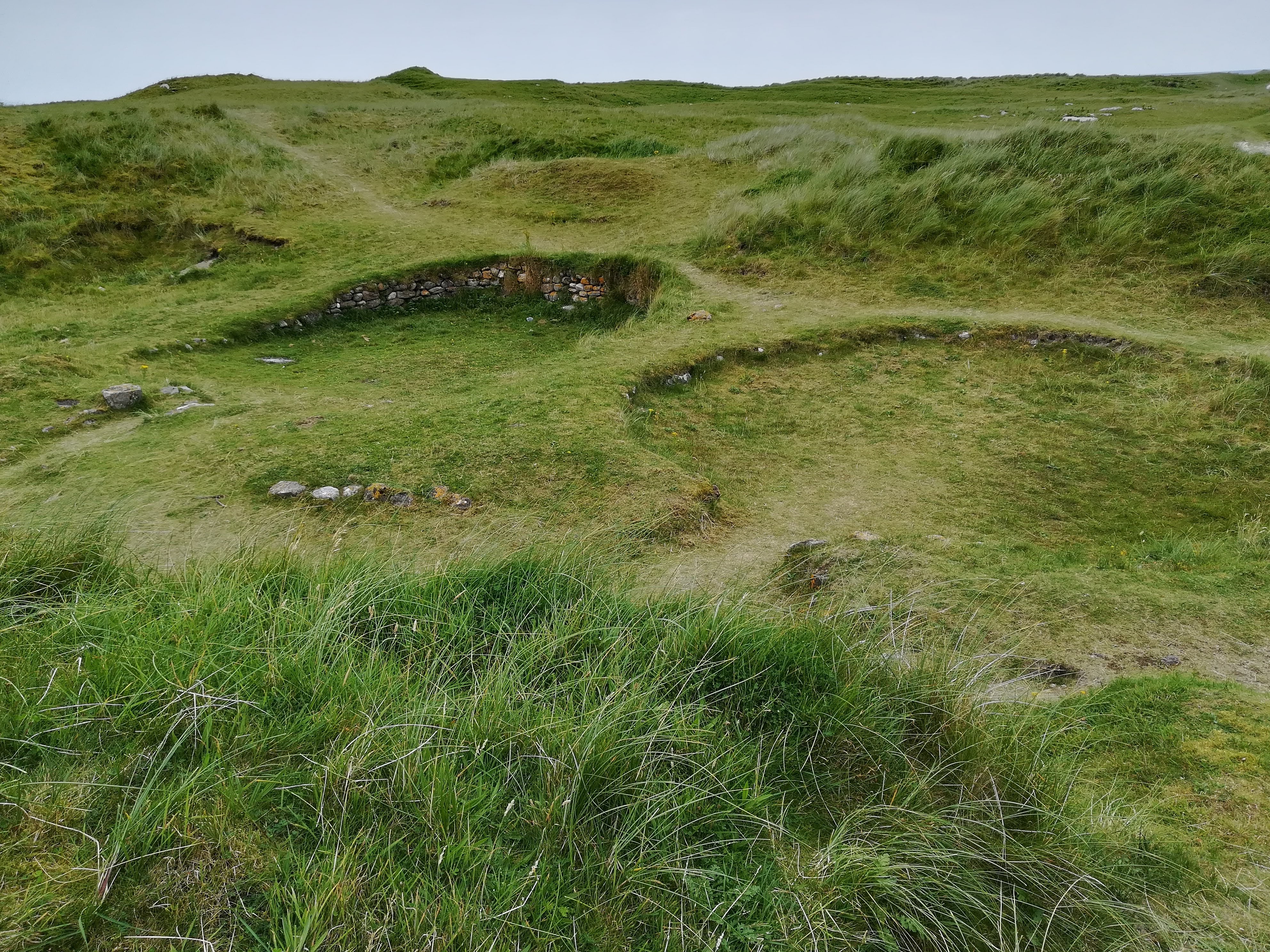
Having had a day of NO WILDLIFE we were thrilled to spot a huge pod of dolphins playing out to sea (too far away for photos I’m afraid). We then enjoyed watching literally HUNDREDS of rabbits playing in the dunes – a proper Watership Down it was!
Loch Eynort:
We couldn’t resist the lure of a woodland, so ventured down an extra narrow side road, with fingers firmly crossed that we would be able to turn Molly around at the ‘dead end’.
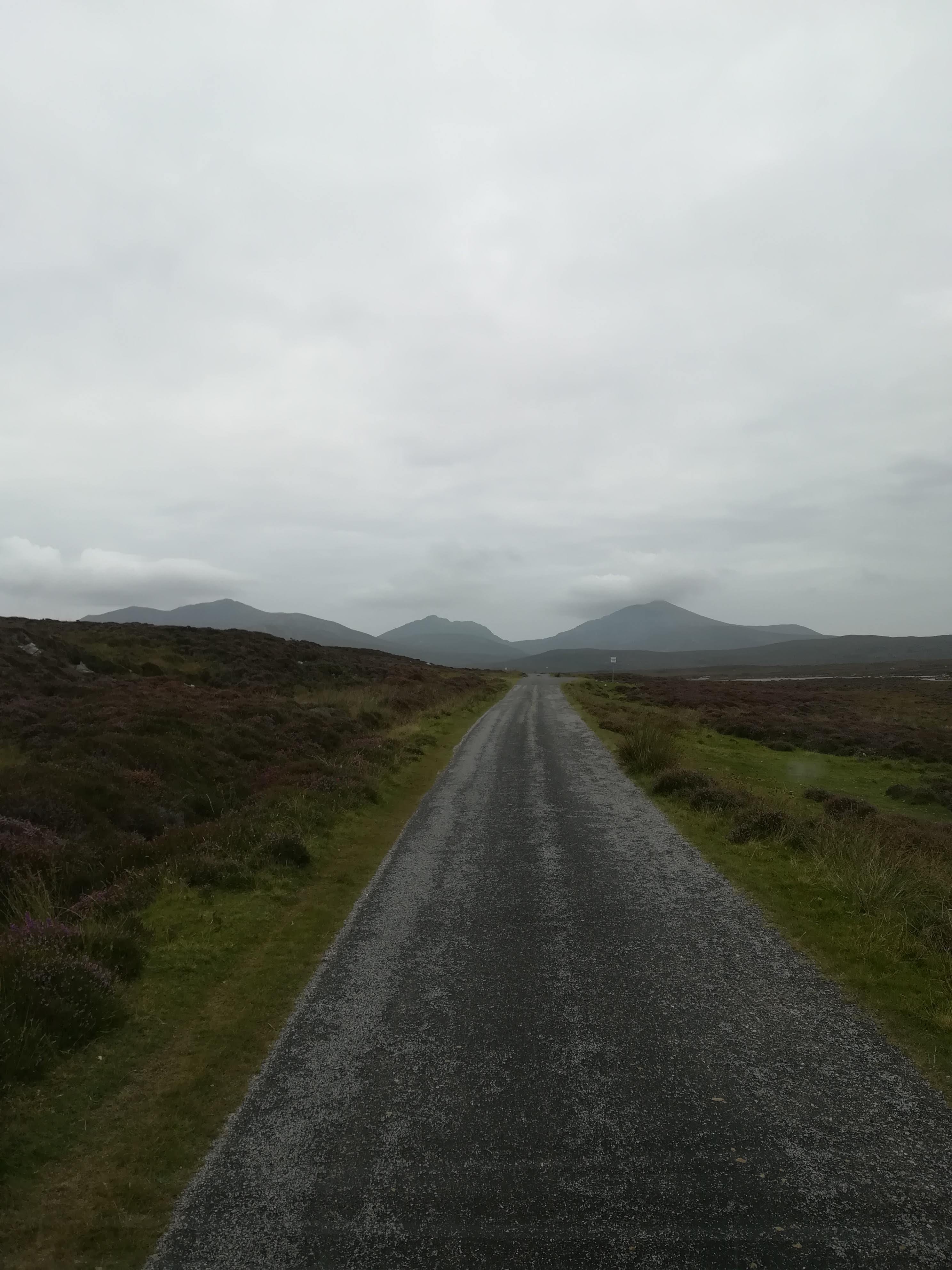
We discovered a good parking area and set off to explore this area of forest restoration. The vision of one man – Archie Macdonald – who has planted more than 100,000 trees over many years, proving that trees will grow on the Outer Hebrides if you keep the deer and sheep away from the saplings.

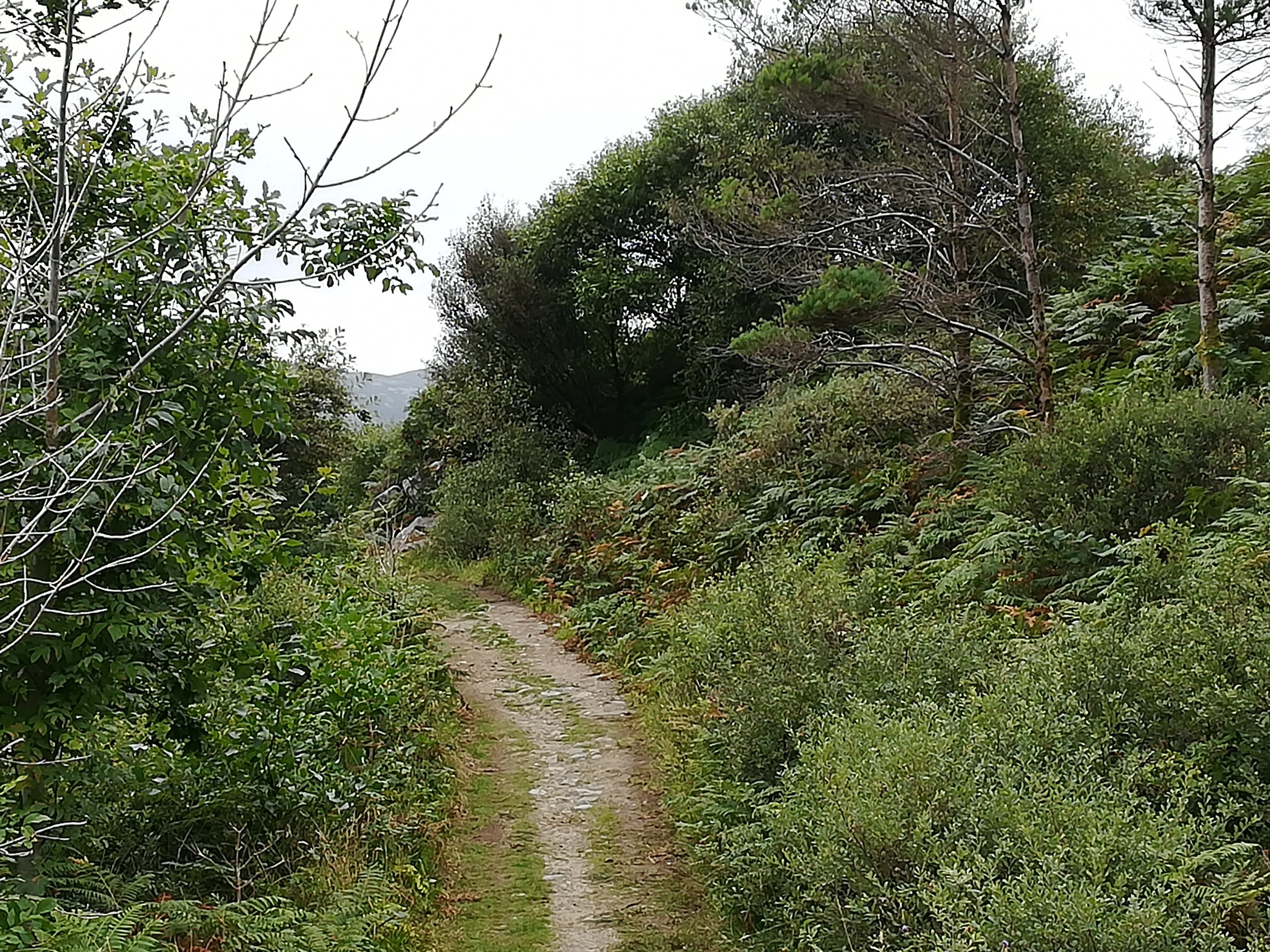
It was to be our lucky day! As we walked along the 5 km of paths enjoying the variety of trees, and some birdsong, we noticed an elderly gentleman working away within a fenced area. We stopped to chat – only to discover that we were speaking to THE gentleman himself! As you can imagine . . .a wise old chap, born and bred in the area and returned after the war – he now lives in a lovely bungalow alongside his ‘project’, which spreads across the hillside behind him. Views to the south overlooking Loch Eynort complete the scene. His vegetable plot had plenty of seasonal vegetables – his main complaint was the lack of rain (yes! We really ARE in the Outer Hebrides!) and the local rat and rabbit population who firmly believe the veg are for them!
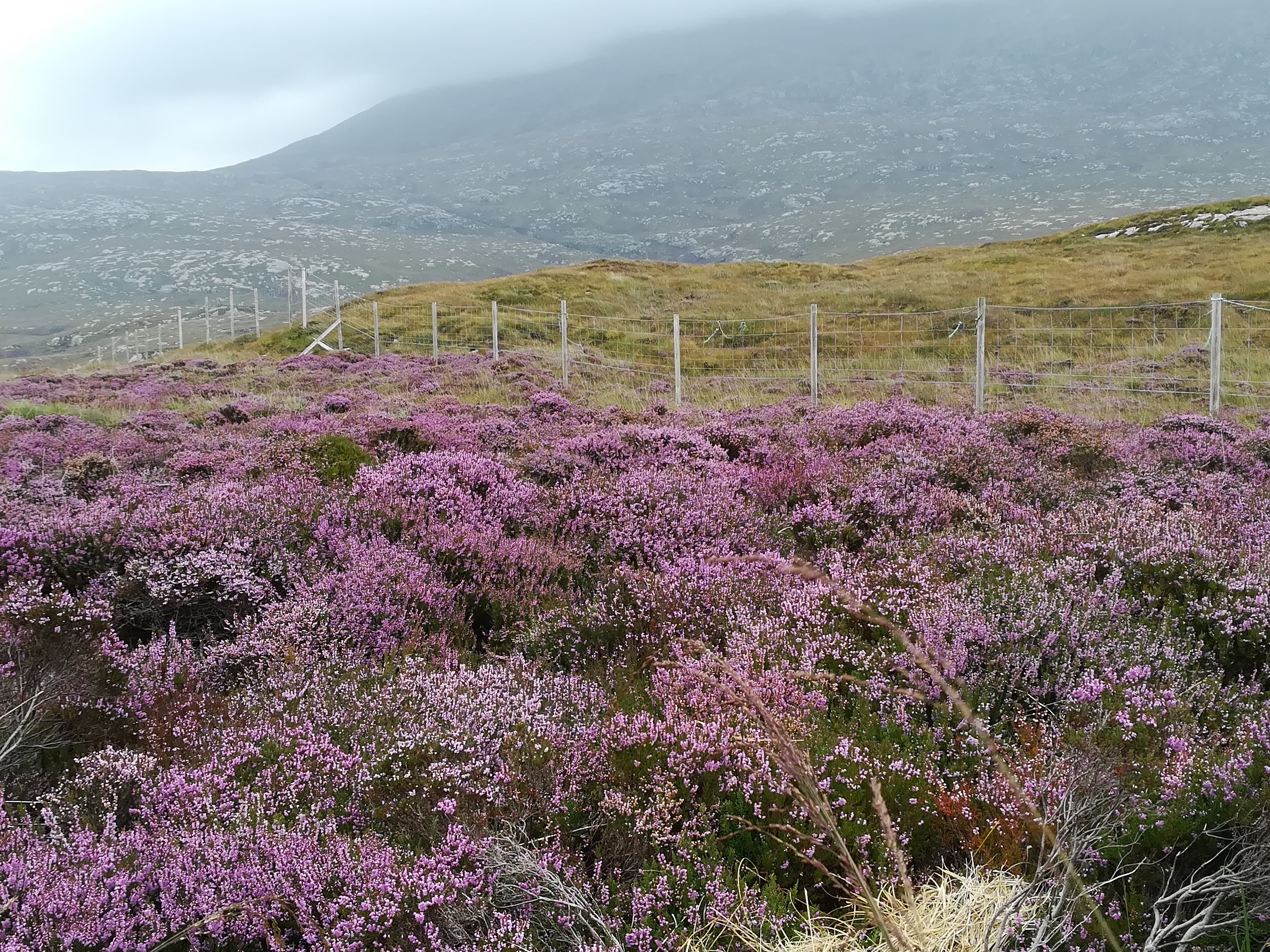
We walked the entire outer path of his plantation, relishing the wonderful swathes of purple in the heather.
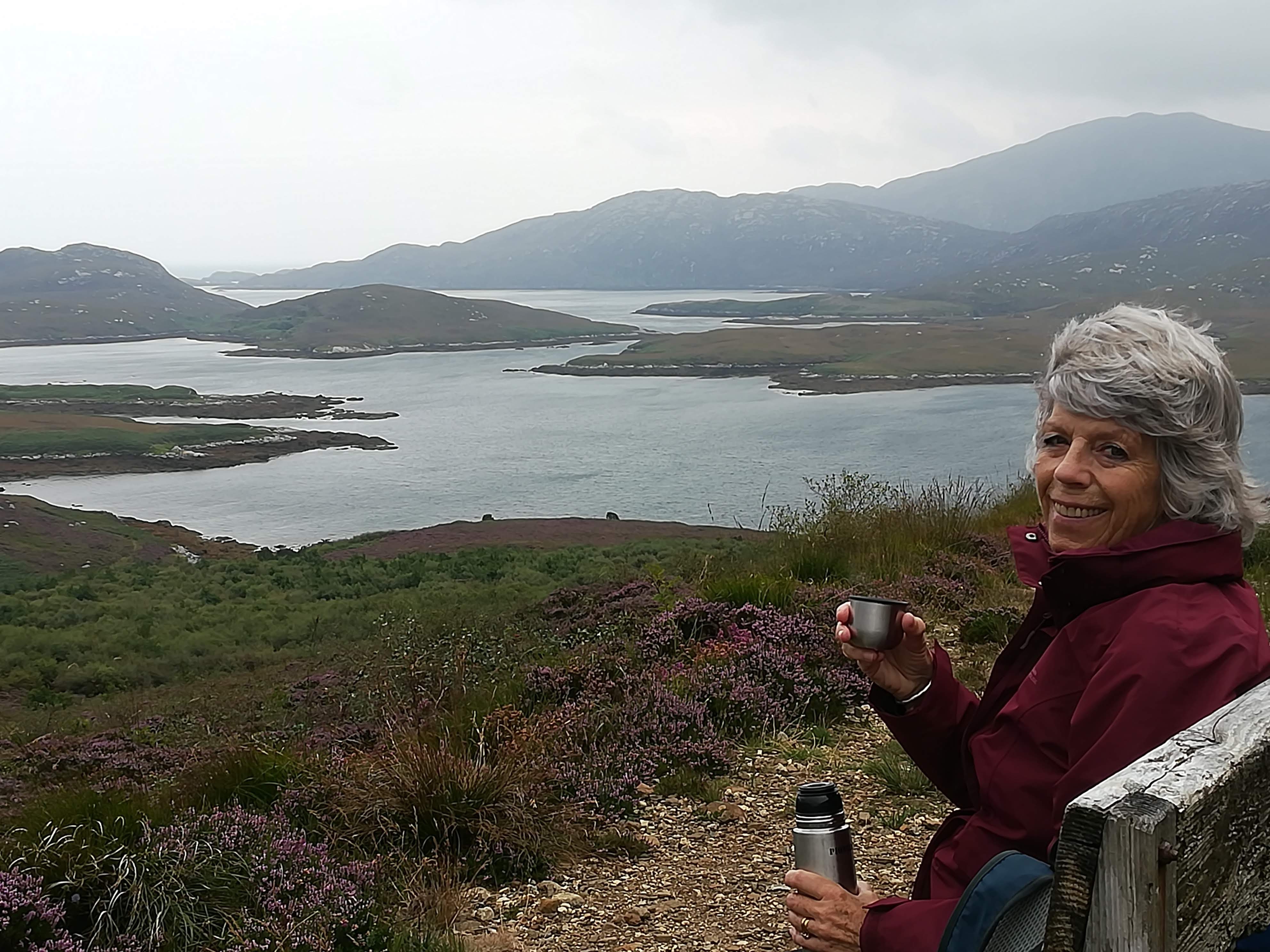
Then ‘drinking in’ the fabulous views both of the inland lochs and out to sea from the highest point.
Kelbride campsite on the south coast of South Uist made a perfect stop for our few days in this area – far reaching views across the Sound of Barra – large pitches and all facilities spotlessly clean.

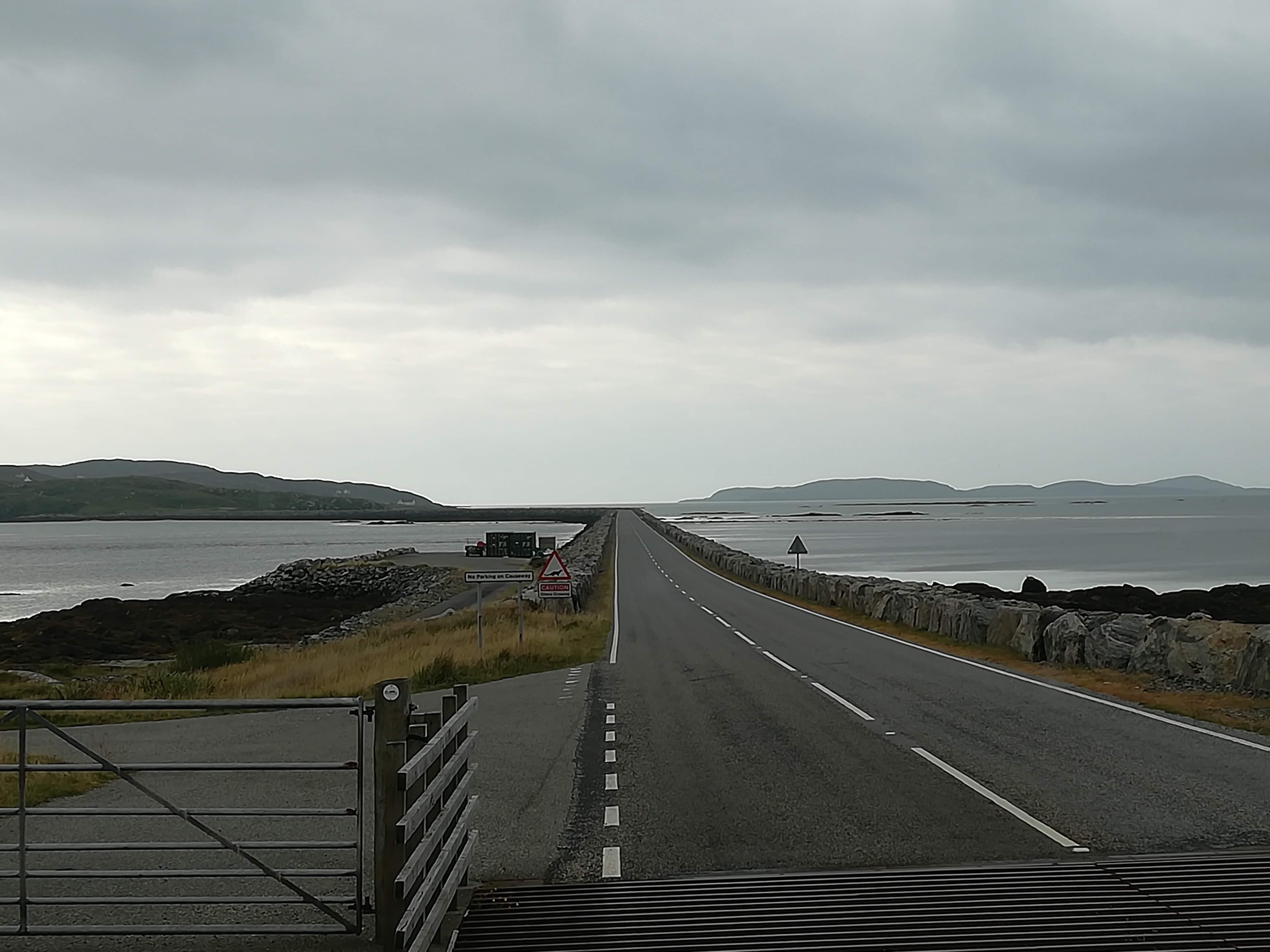
Eriskay Island: A causeway (built 2001) links Eriskay (south and slightly east of South Uist), a tiny island of about 200 people which spreads 3 miles north to south, and only 2 miles east to west! Leaving Molly overlooking one of the many pure white beaches,

we headed across the moorland following a walk recommended for seeing wildlife. Plenty of scrambling through waist high bracken, and clambering up rocky slopes rewarded us with a good number of grey seals lying about in the rocky inlets.

An Overview of the Islands so far:
This chain of 119 islands (only 14 are inhabited) off the west coast of Scotland can only be described as wild and wonderful. The few trees that exist have been carefully planted as small, forested areas to attract wild life. Otherwise, there are miles of low rolling hills – the highest being just under 800 metres above sea level – interspersed with many lochs of both sea and fresh water. Acres are peat bog give way to huge rocky outcrops. Long white sandy beaches appear at every turn.

Houses are well separated, each crofter having their own parcel of land. Many ruins still stand as evidence to the historic clearances. Nowadays, later generations are returning to the family land and settling into their recently built modern-day houses. Gardens are low maintenance but always neat and tidy. Strong and sturdy shrubs – heathers, montbretia, fuchsias – are planted to withstand the ever changing and often violent weather.
And then there are the roads – often single track with passing places, but a good number of passing places. The locals are not only friendly (everyone waves at EVERYONE) but also very happy to give way to us foreign motor homers with a smile and a wave. Road surfaces are good (way better than Herefordshire!) and the undulating landscape gives a roller coaster type ride as Molly negotiates the little peaks and knolls.


Causeways link most of the inhabited islands, making our journey down the islands a doddle. Isolation must have been a major problem when the only means of crossing was to wait for low tide, or later by ferry. Nowadays islanders from the south can work/shop/visit the north with ease.
We move onto Benbencula now – more later . . . . .
 Molly's Folks
Really wide there. Hope the weather improves and doesn’t mar the views for you
LikeLike
Glad to hear you are back exploring again. I can’t believe “no rain”.
LikeLike
Thank you so much.
Best Wishes, William
>
LikeLiked by 1 person
Despite the lack of wildlife at the start of the trip it sounds like you are having a fantastic time. Stuck here in lockdown it was a joy to read about your travels. Keep posting please
LikeLike
Looks wonderful…and parts very “Falklandy”!! Enjoy the rest of your trip xxxSent from my Galaxy
LikeLike
Thank you for the spectacular photographs and interesting commentary. Now firmly on my bucket list!
LikeLike
Peter, Mal,
Good to see you’re getting out and about. I have always loved the Hebrides – but most of my sightseeing has been seaward rather than land based. I hope the weather is kind to you but in fierce storms or summer stillness the islands are beautiful either way.
We’ve pretty much remained in Cornwall for the duration – an occasional side trip to London or Liverpool to visit our new granddaughters is about the extent of our travelling. I’m beginning to hanker for the chance to travel but cannot face the CoVid bureaucracy that going overseas involves. We’re considering joining a ‘Northern Lights’ cruise that now departs from Dover rather than Bergen in the New Year – small ship, start and finish in UK – seems simple enough.
We must all get together once it’s all over – when, where and how will need some thought!
Keep well, keep travelling
Yours aye
Ian W
>
LikeLike
We loved reading about your travels in this wild part of the UK (photo of seals particularly appreciated!). Now the Eriskay Love Lilt is running through my head – if you want to have that experience too, here it is!
LikeLike