Hello again to friends and family!
Thanks to Covid, we’ve been out and about in Molly far less than we would have wished. A long weekend in Pershore enjoying the sunshine and numerous beautiful walks – and a full week on the south coast staying in Weymouth, where we managed to catch up with friends and family, but also to support and cheer on daughter Sarah and her partner Matt who were doing the Jurassic Coast challenge – 100 km over two days. We had a great time, despite high winds and driving rain for most of the week.
And so to Norfolk – one of many places in the UK that we’ve never visited. Friends who’ve lived here in the past said we were missing a treat . . . . and they were correct!
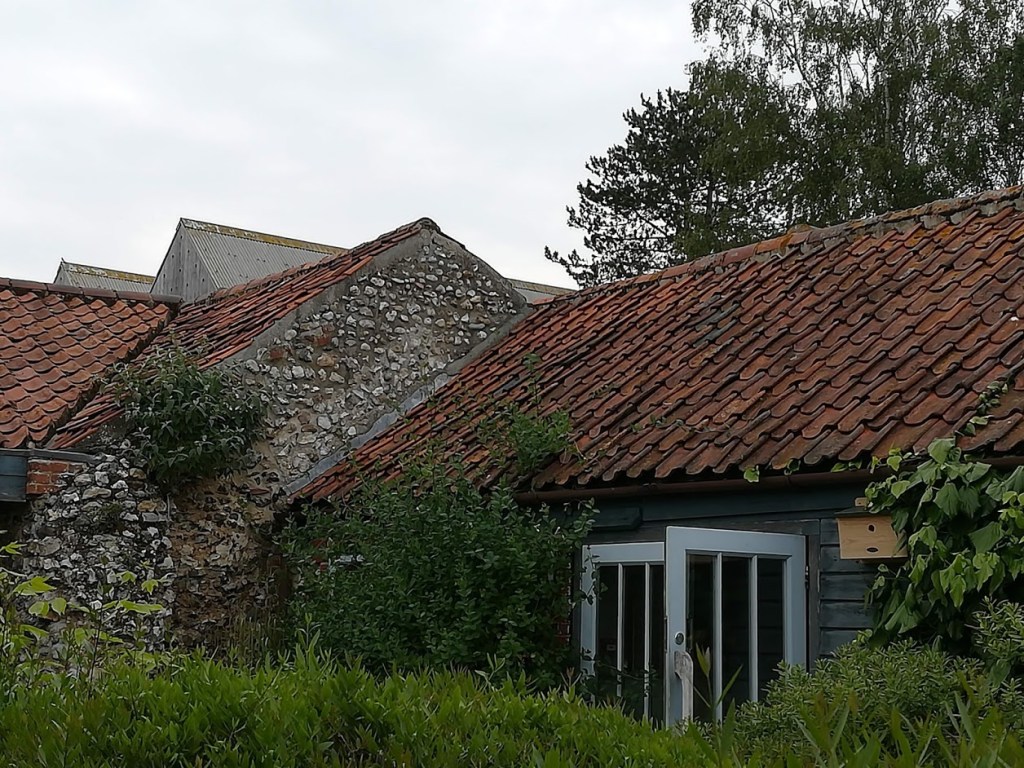
Yes, it’s very flat (in some areas) but beautifully green and lush, with acres of bountiful crops. Farm shops and road side stalls are full of freshly picked fruit and veg – what a wonderful excuse to be gluttons of healthy food! The countryside is dotted with pretty villages, all beautifully kept with colourful gardens, and with many of the local traditional houses constructed of flint with a red pantile roof. Pantiles originally came to UK from the Netherlands in the 1700’s, and are a type of fired roof tile normally made of clay. Apparently the colour is controlled by the degree of reduction in the kiln. The glorious terracotta tiles appear from some distance away (thanks to the flat land!). These days, houses are built of the local red brick, which sets of the tiles very well.
We’re staying on an idyllic campsite here – it’s a CL – for those non-campers among you this is a Certified Location. ie Certified by the Camping and Motorhome club as having fresh water on site, as well as chemical and rubbish dumping facilities. There are only 5 pitches on these sites – hence they’re very quiet and peaceful. This one is in a small orchard with each pitch bearing the name of the tree that used to (or still does) grow here. We have enjoyed relaxing here each evening, after a day’s exploring.
We’ve barely scratched the surface of Norfolk – there is so much to see and do. Sandringham Estate was a ‘must do’ for us and what a joy it was. We felt privileged to visit the very rooms where the Queen and the Royal family retreat to every Christmas. We were not allowed to take photos indoors, so you’ll have to look on Google! The grounds were a delight as well – not formally laid out, but neatly kept and in tune with nature.

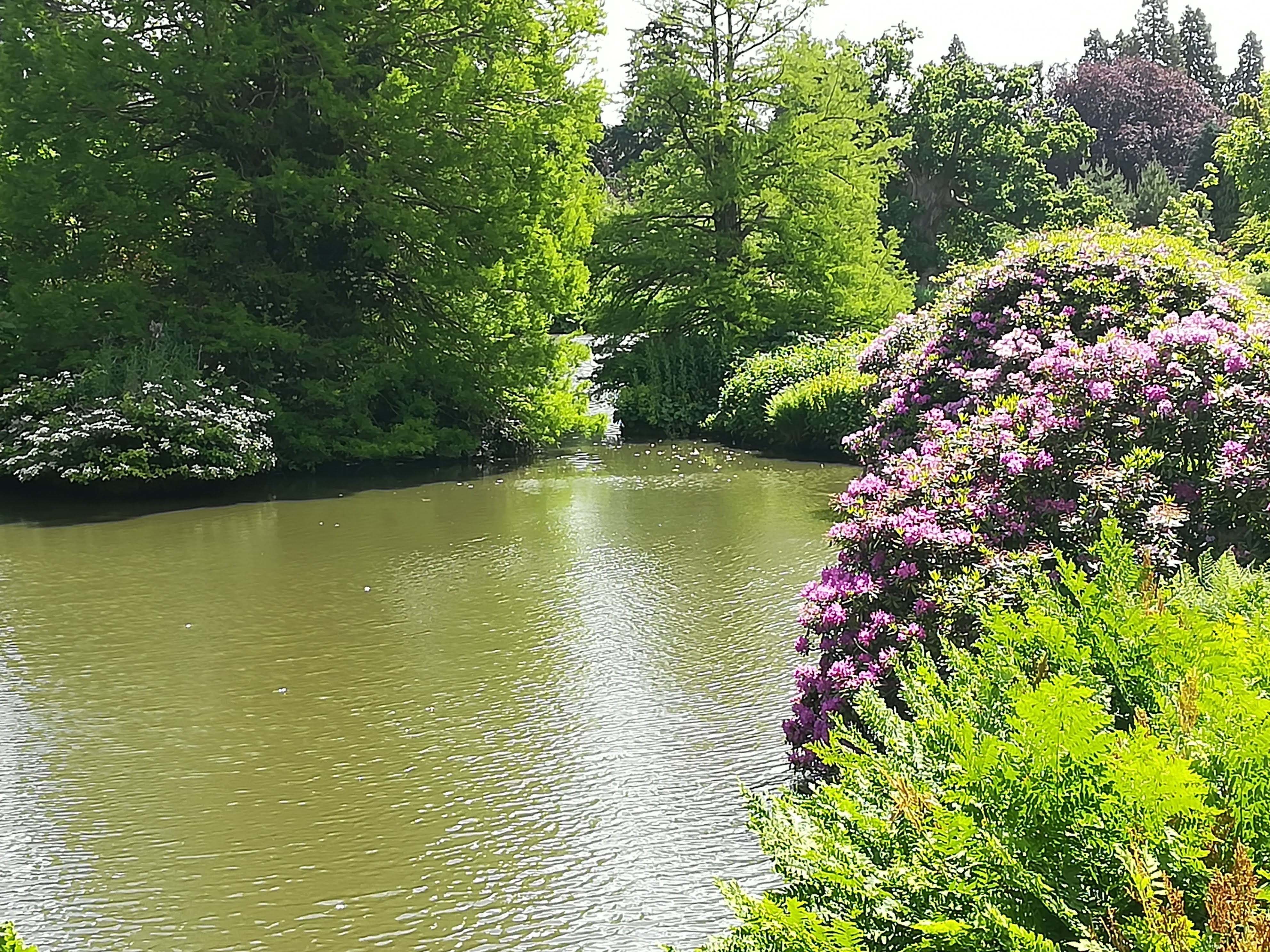
We were lucky to visit on a day when the church was open. I’m sure we’ve all watched the Queen arriving here on TV, but we were astounded by how tiny the church is. The intricate wood carvings – many angels with musical instruments – and the stunning silver engravings on the pulpit and the altar are breath taking.
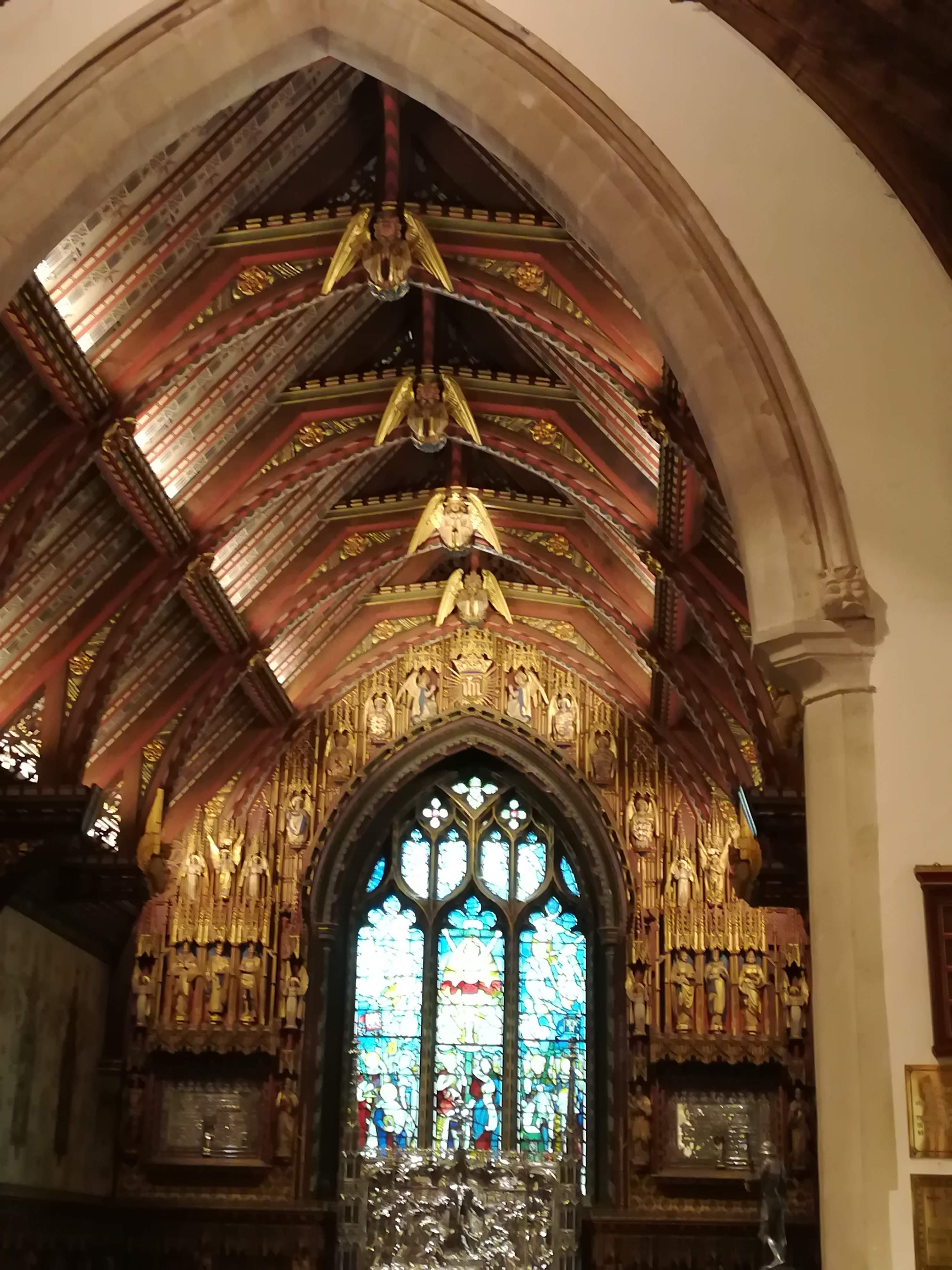
Kings Lynn proved an interesting visit – far too much history to absorb within one visit – the town began in the early 1100’s and was an important trading post thanks to the waterways which stretch inland from The Wash. The narrow streets near the harbour house some stunningly restored buildings, very few of which were open thanks to the pandemic.
Our journey to Castle Acre Priory was a bit of adventure! Valiantly following the English Heritage signs, we had not noticed the warning for a narrow road . . .we were already committed when a further sign warned us of no access for anything wider than 6’6” (Oh Dear! Molly is 7’7” even with mirrors pulled in!), so with much cursing and gnashing of teeth, (not to mention the disgusted looks from other drivers) we had to turn around and find another entrance to the village. Note to anyone who ever visits Castle Acre – avoid the Bailey Gate – it’s very narrow!!

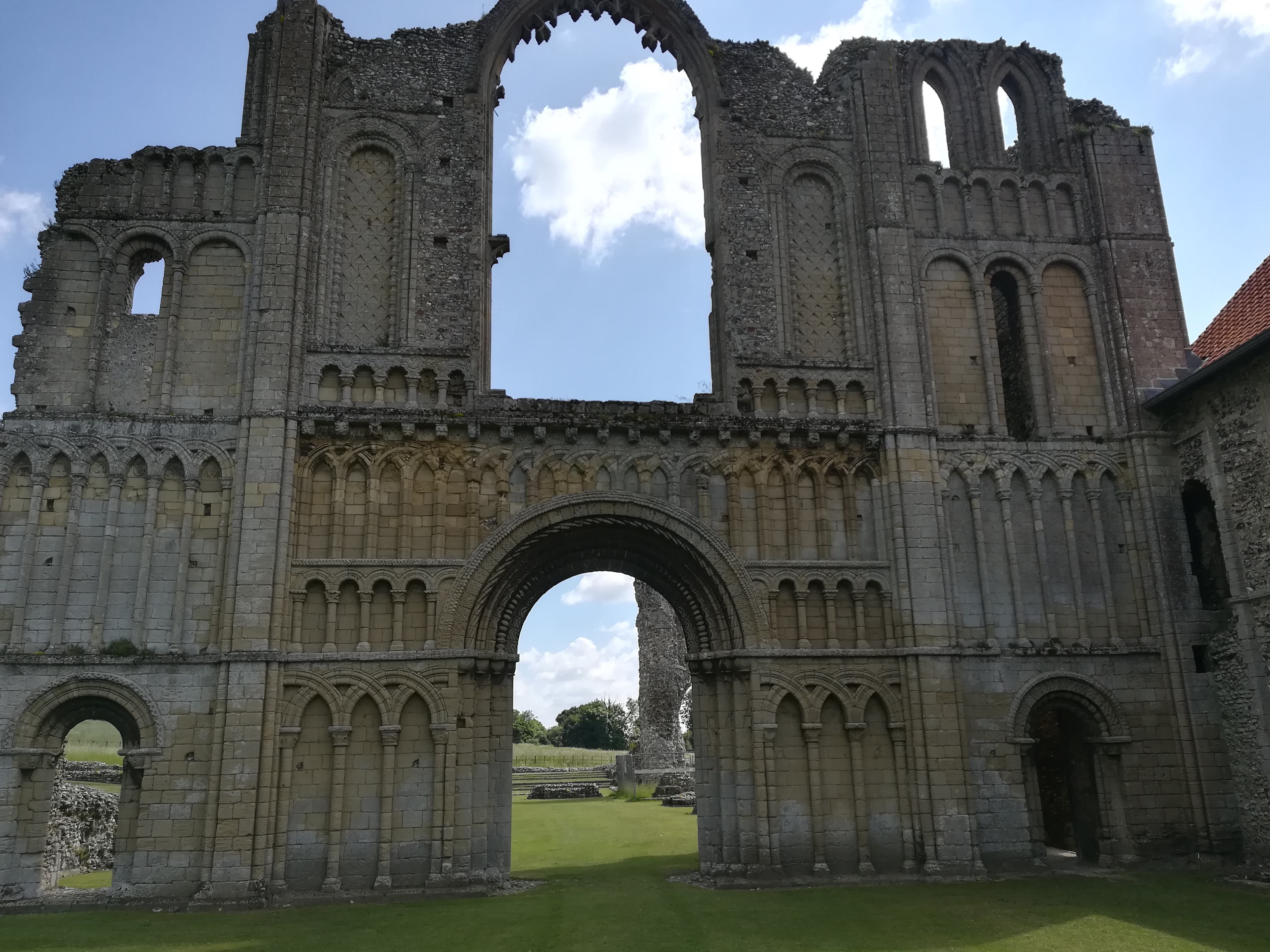
Worth the aggro however – the Priory dates back to 1090 and is one of the best-preserved monastic sites in UK. It was home to the Cluniac order of monks whose divine adoration led to the extensive decorations throughout. Much of the splendid west end door remains, along with exquisitely preserved flint walls stretching over a huge area. As with any ecclesiastical setting, the sense of peace was overwhelming and we were uplifted and calmed by our visit.
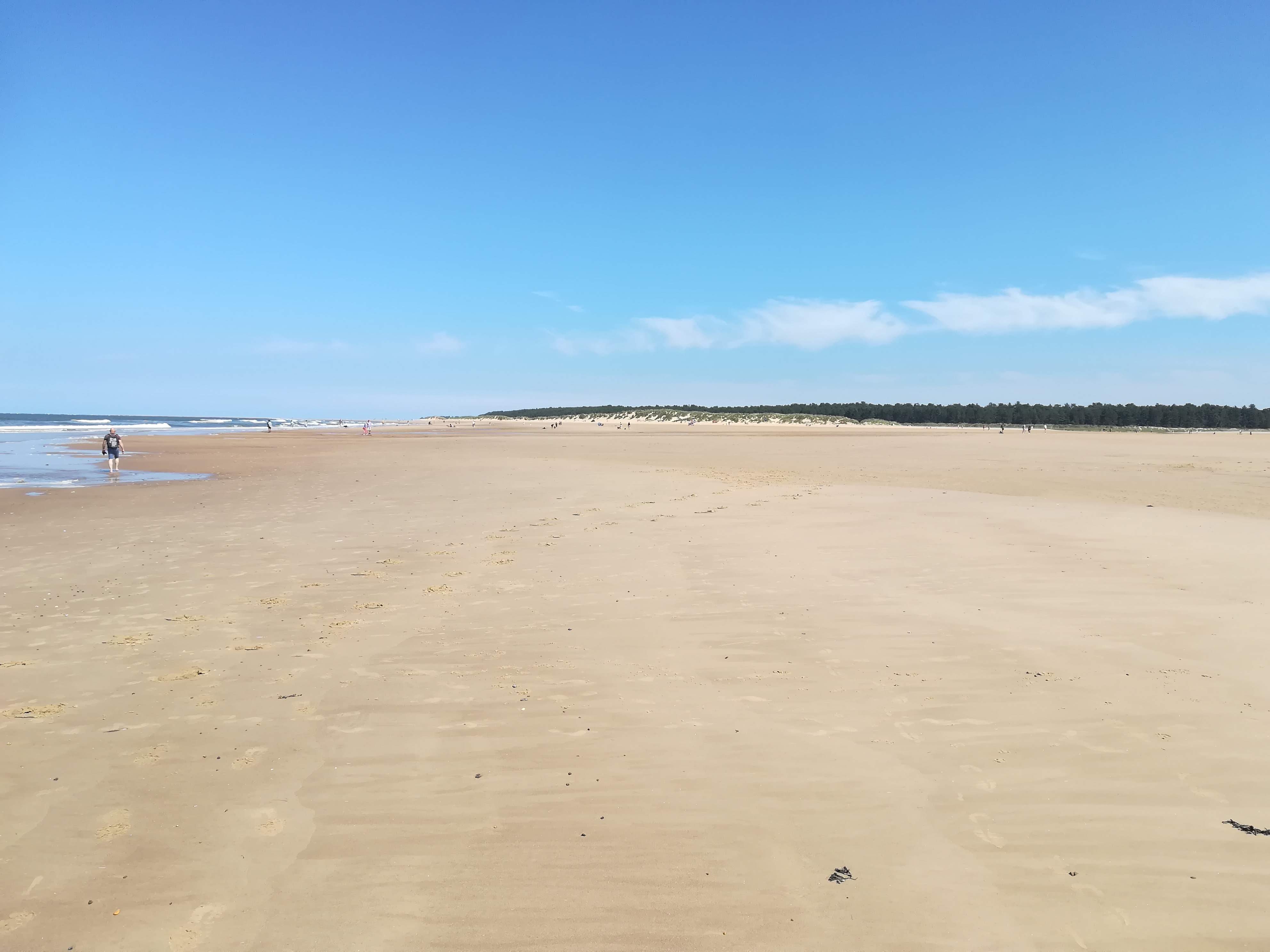
As we explored along the (highly recommended in tourist guides) coastal route from Blakeney to The Wash, we were disappointed by the height of the hedges. Despite the height that we sit in Molly, we were unable to see the sea views in many places. Our patience was rewarded however, when we reached Holkham. One of many nature reserves in this area, spreads across wetlands, through the sand dunes and onto an enormous beach. A 20 minute walk led us from the enormous car park, over the Norfolk coastal path and down to the sea. Miles of wonderful white sand – and notwithstanding the hundreds of cars in the car park, the people had all but disappeared into this vast space.

We were delighted to discover a sea (excuse the pun!) of wildflowers just behind the dunes . . . nature as wonderful as ever!

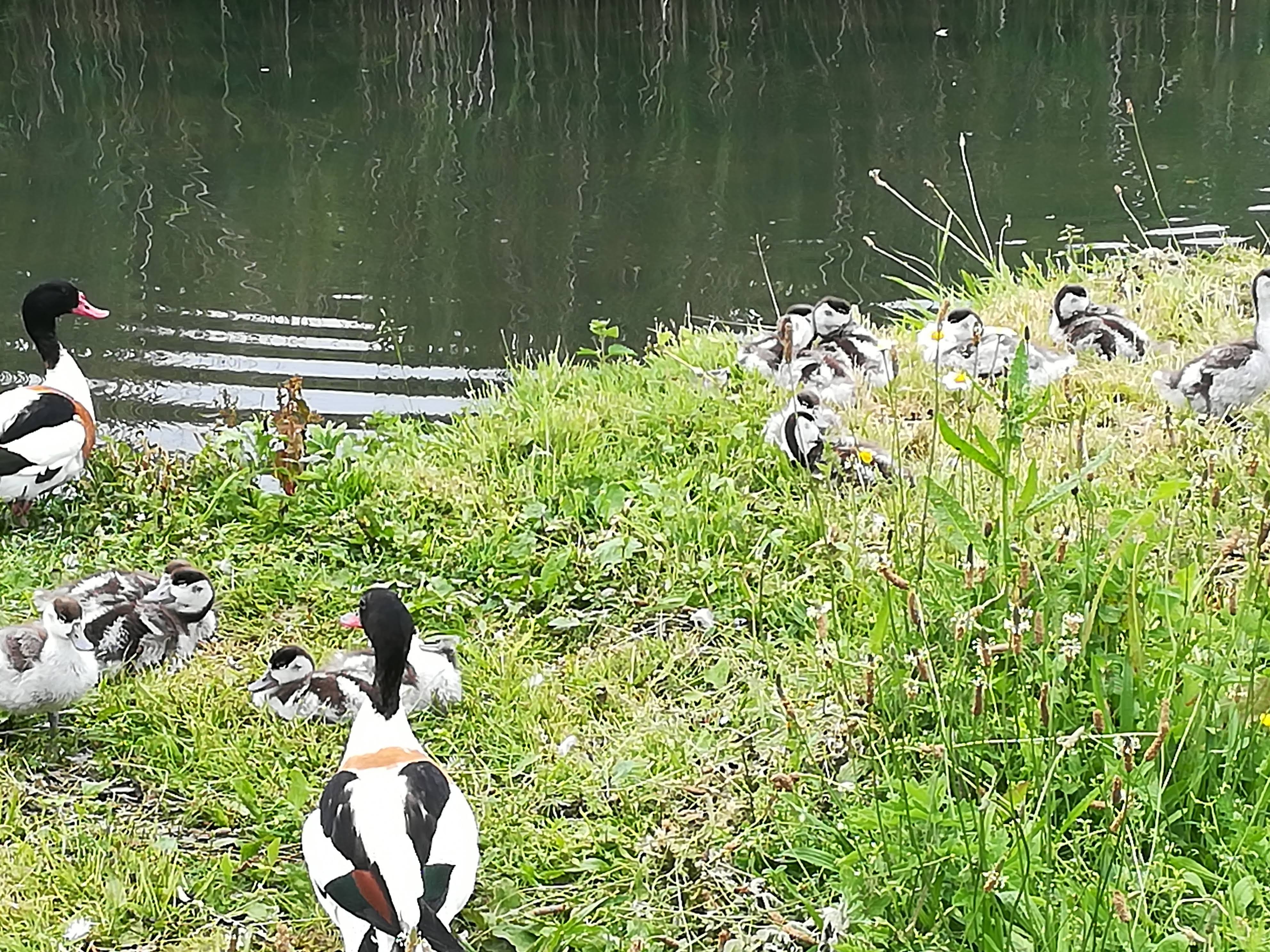
Pensthorpe Nature Reserve is a 700 acre woodland conservation park, absolutely brim full of wildlife. It was a pleasure to meander along the many paths, through the various gardens, and in and out of enclosures which protected many bird species. This place needs many more visits – it would be a great place to take a picnic to enjoy on one of the many benches whilst taking in the many birds around you.


Today we’ve moved on from Norfolk to Lincolnshire – more later. . . . .
 Molly's Folks
Thank you. Will read with interest.
Best Wishes William
>
LikeLike
Looks idyllic – a lovely county which I know well. Worth a trip to Cley-next-the-Sea and Blakeney Point.
We await the next instalment with anticipation!!
Cheers – Phil & Sarah >
LikeLike
Just been to JT’s memorial – a fitting send-off for him, Phil
Sent from my iPhone
>
LikeLike
Dear Peter and Marilyn,
Nice blog. Just shows how much there is on our doorstep!
We are in the throes of training our 12 week old working cocker spaniel, Fergus.
As Ever,
Ian 01643-841318 07500-229625
WEBSITE: http://www.ianmoncrieff.com
Sent from my iPad
>
LikeLike
Sounds wonderful! Thanks for including us in your adventures!
LikeLike