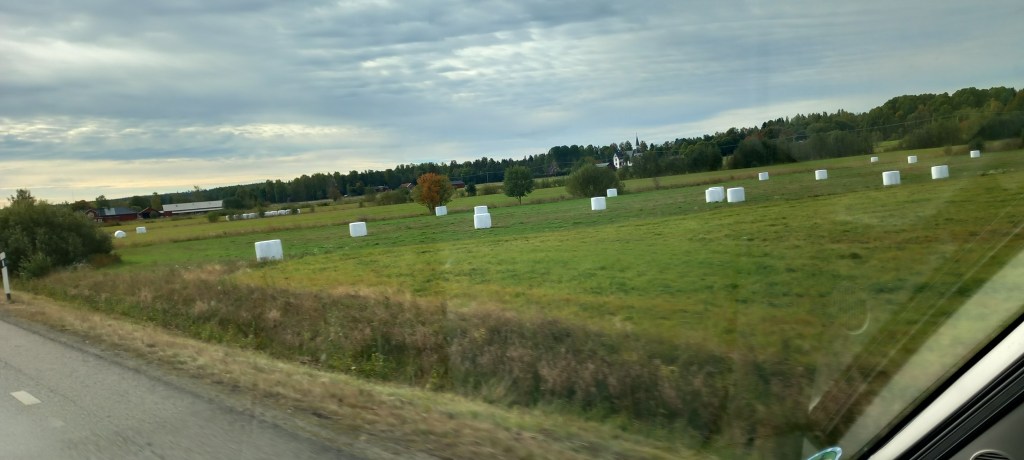
Heading South East, the vistas opened up to much more farming. The farmers have been very busy collecting sileage which will be food for their animals when they are kept indoors during the snowy winters.

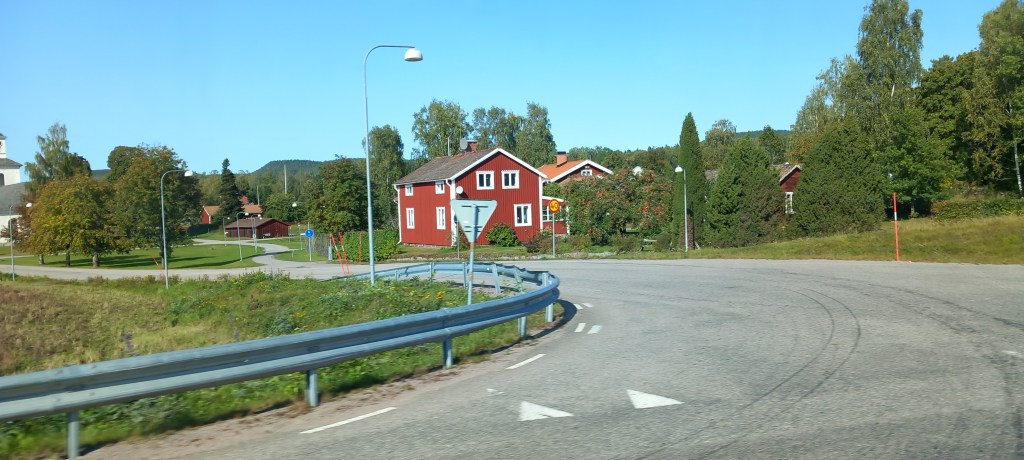
The majority of country dwellings in Sweden are red wooden houses, with white framed windows – these have become a symbol of Swedish pastoral life. The red paint originates from a copper mine (now defunct) in Falun – hence is known as Falu red. Both iron and copper dust are used to make up the paint. Their fungifying properties help to preserve the wood. The bonus is that homeowners only need to brush off the loose pigment and dirt before reapplying the paint. (no laborious paint stripping and sanding necessary)
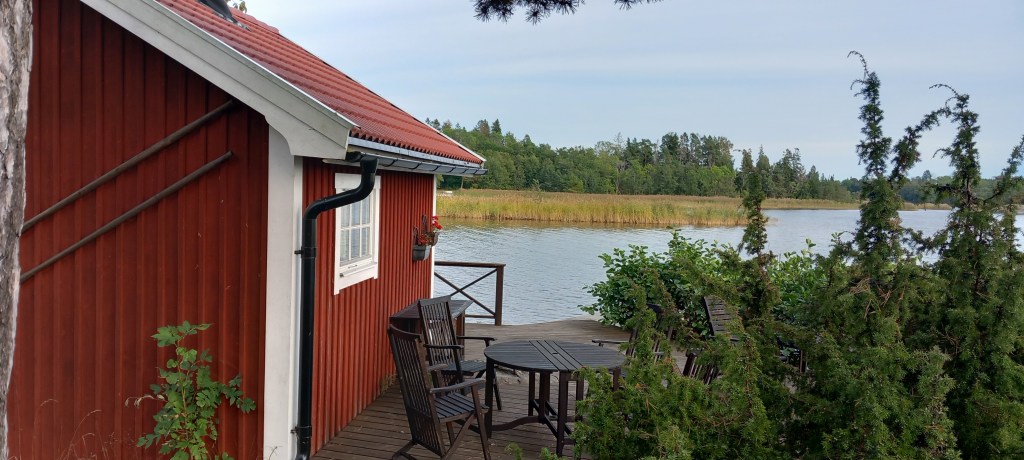
We were so looking forward to reaching the east coast and seeing the sea – our campsite was in Ljusne, where we discovered that a series of little inlets and islands are characteristic of this coast. The water is brackish, and it’s rare to get a clear view straight out to sea. We spent a pleasant two days exploring the area on foot and relaxing in the sunshine.

Moving down the coast to Harghamn (meaning Harg port), our campsite was right by a little beach and jetty. After so many nights of standing in the cold, hoping to see some movement in the sky, we FINALLY SAW THE NORTHERN LIGHTS! Now, don’t get excited – it is still too warm (they say), and we are too far south, to see a panoramic, colourful show – just a green glow which flashed across the sky from time to time. (we still need to do the threatened trip to Iceland to see them properly!) The few photos I took were hopeless – you’ll have to wait until next time!
As we approached Stockholm, we enjoyed a visit with some Swedish friends who we met during our RTW cruise. Living on the archipelago just north of Stockholm, they enjoy all the benefits of being by the sea – the essential sauna (every Swedish house has one!) by the jetty, along with a wonderful BBQ area and a boat (of course) which takes them out to a little cabin on an island for summer visits. The house has been passed down through the generations and been modernized and extended over the years. We were treated to a typical Swedish lunch of locally caught perch (it’s a fish!) cooked in butter and dill, with potatoes and salad – followed by home baked cinnamon buns. What more could we ask for?!

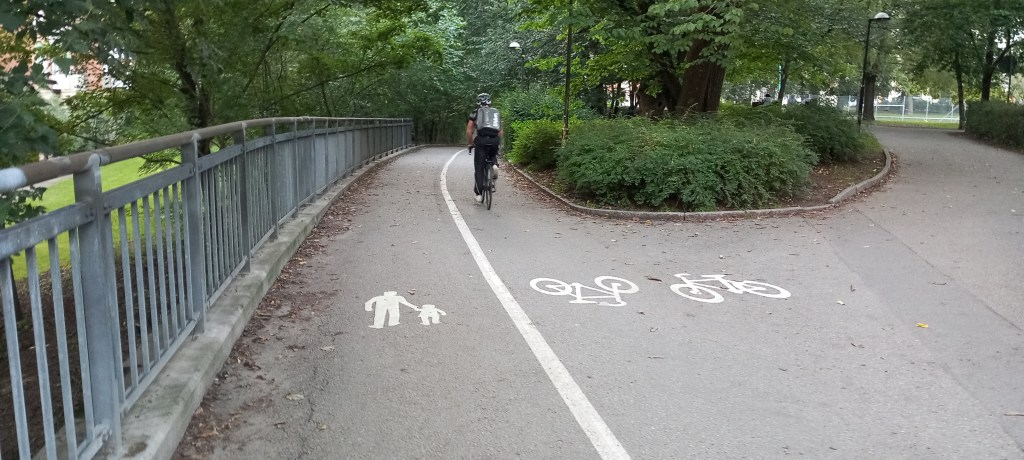
And so to Stockholm! We’d prebooked a campsite here which is perfectly situated for access to the city. We walked EVERYWHERE. There are cycle and walking routes universally on all fourteen of the islands that make up Stockholm.

The old town, Gamla Stan, wowed us with its narrow streets, colourful buildings and pretty little squares. Wide tree-lined avenues are interspersed with a multitude of parks, everything beautifully kept and with cafes and restaurants spilling out onto the pavements at every turn. Stockholmers are “outdoor people” – they walk, cycle and use their boats during the summer. The city parks are set up with ice skating rinks and cross country skiing routes for the winter.


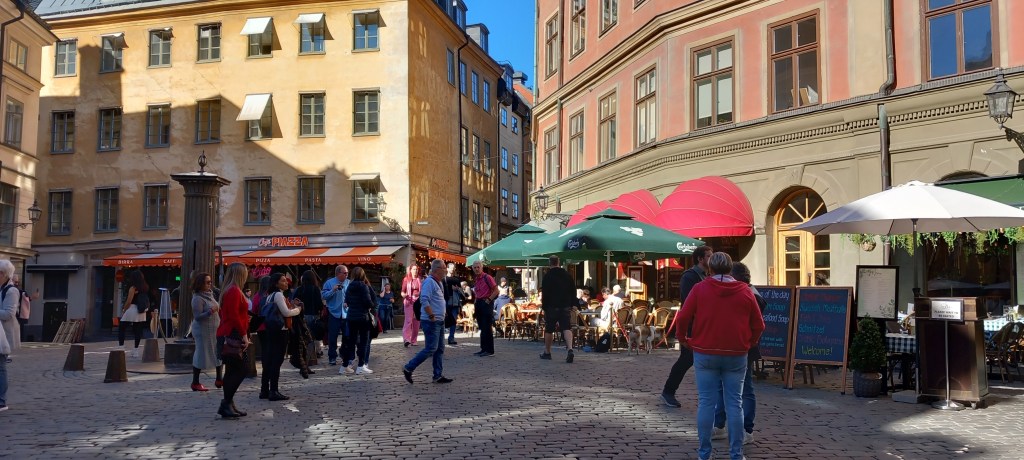
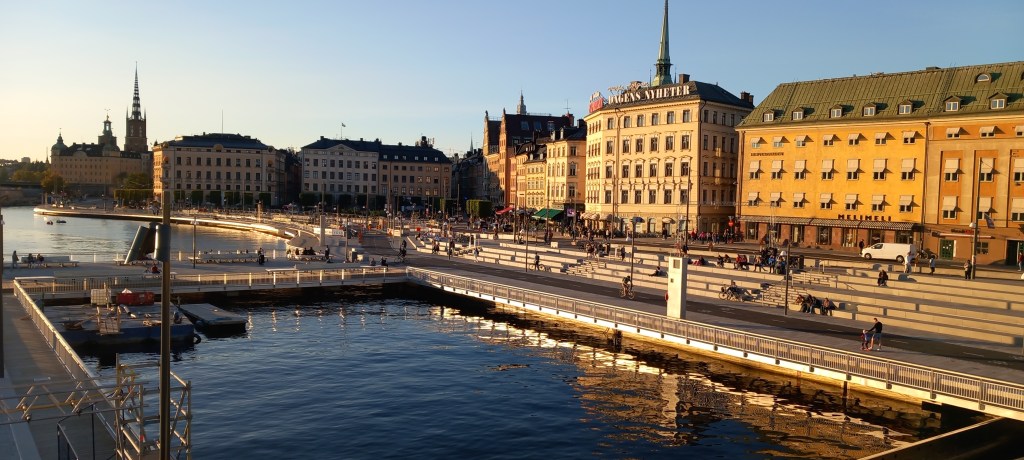
Coffee and cake (more cinnamon buns!) is the norm! And EVERYONE spills out of their offices and shops and into the pavement cafes for light supper and drinks from 5pm. I suspect that ALL the locals are making the most of any sunshine before the long dark winter days begin.

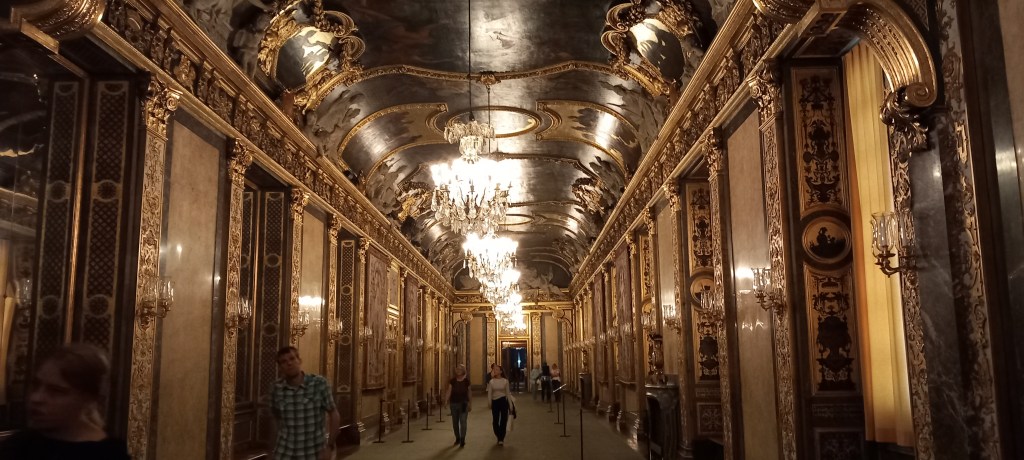
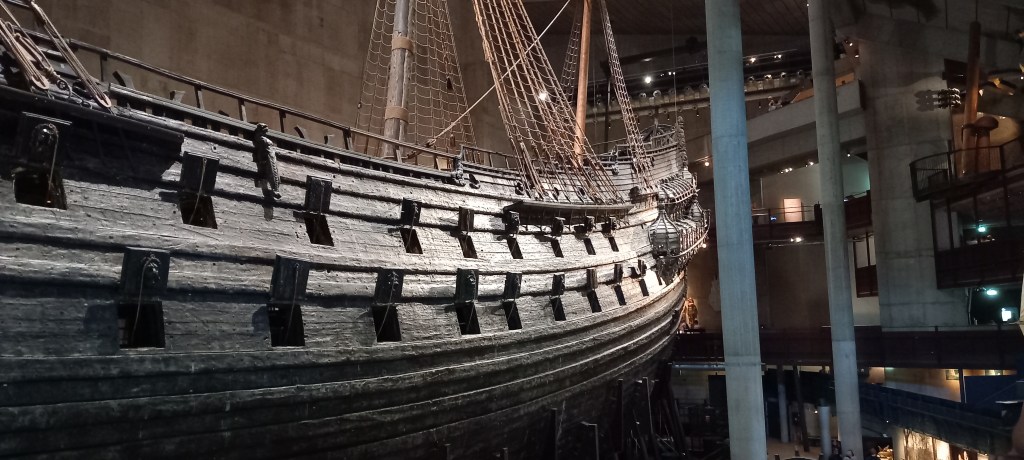
The Royal Palace is ENORMOUS and palatial (as it should be!). We managed to catch an organ recital in the cathedral, allowing us time to stare in awe at the ornate Royal pews! We were blown away by the Vasa Museum. The Vasa is a 17th century ship, built to what was a very high standard in its day, with literally hundreds of amazing carvings all of which gave the message of Sweden and its King being a very powerful. Sadly, it sank on its maiden voyage only a few hundred yards from the dock! Three hundred and thirty three years later (yes! 333 yrs!) it was found, salvaged from the seabed and a museum was built around it. 98% of what we see today is the original – very impressive, particularly for the military chappy in my midst!
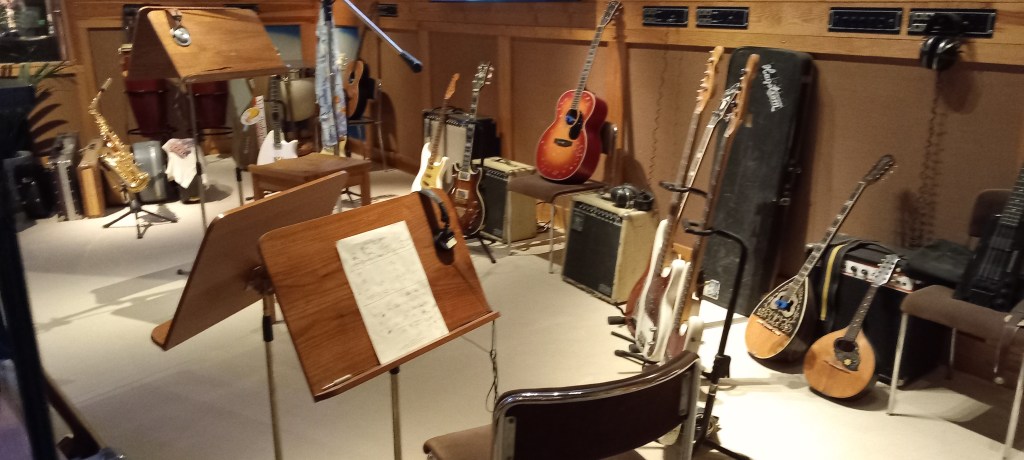
At the risk of making some of you cringe, MY favourite museum was the ABBA museum! We are booked to see the ABBA voyage show in London very soon. We knew that they’d won Eurovision with Waterloo – a song which was forever playing in the local pub we frequently visited when we were first married. What we hadn’t realized was that Eurovision had been held in Brighton AND that it was on the very night of our wedding! As with every Scandinavian Museum we have visited, it was VERY well interpreted, with so much information, and great fun too!
We set off tomorrow to explore over to the west coast and down to Gothenburg – more later.
 Molly's Folks
we loved the old town as well. Lovely city
LikeLiked by 1 person
More super photos – what a wonderful trip you have organised! I hope that you will put on a film show at church once you get back. Monica would delight in these pictures.
Jan M.
LikeLiked by 1 person